
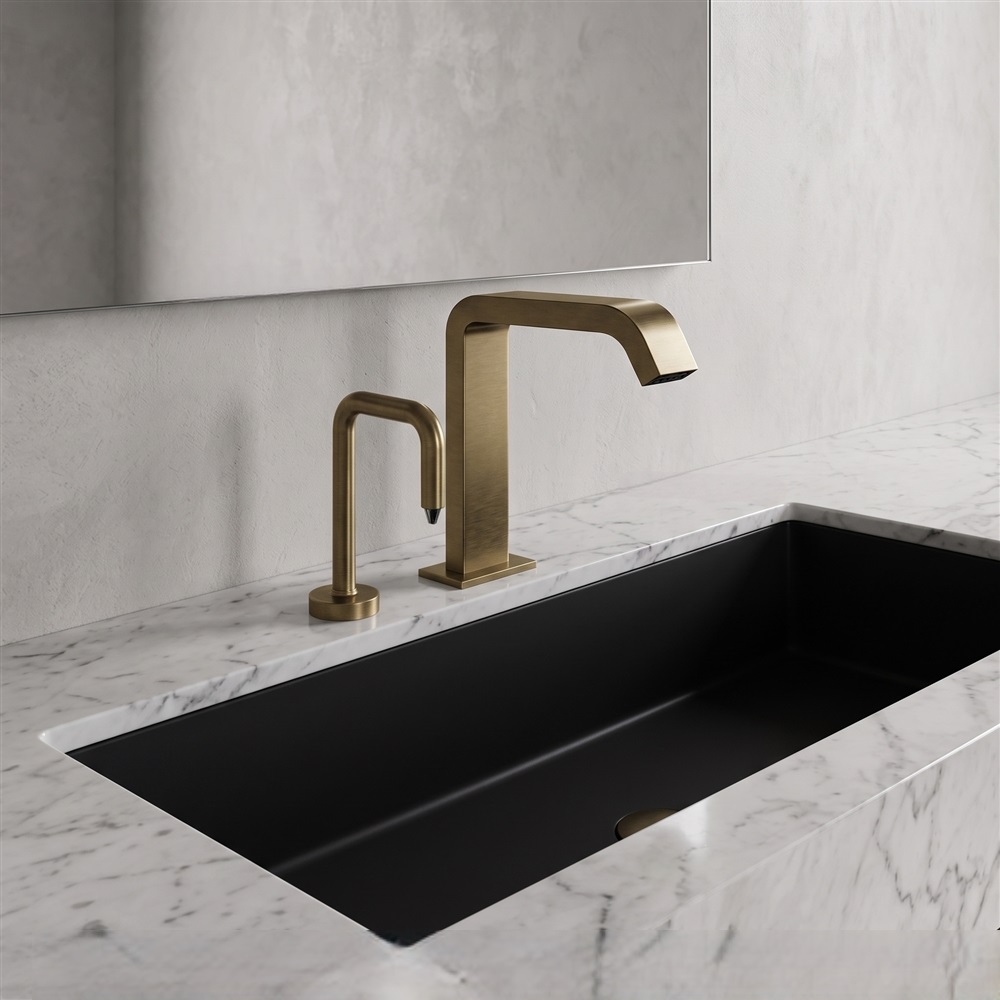
Commercial Performance Priorities
Automatic dispensing reduces repeated contact with shared restroom surfaces
Consistent dispensing helps manage soap consumption and countertop mess
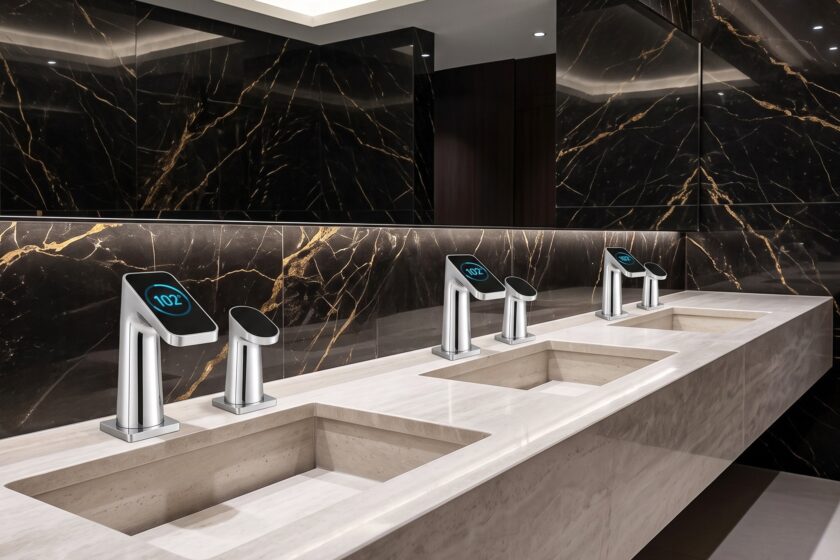
Commercial platforms support offices, healthcare, airports and public facilities
Refill and component accessibility directly influence facility labor
Coordinate Dispensing, Sensing and Maintenance Access Together
Dispensing Consistency
Commercial performance depends on repeatable soap output. Excessive
dispensing increases consumable cost and countertop residue, while
under-dispensing can cause repeated activation and user frustration.
Sensor Placement
The sensing zone should recognize normal hand position without triggering
from sink cleaning, nearby movement or reflective countertop conditions.
Refill & Pump Access
Soap reservoirs, pumps, tubing and power components should remain accessible
to maintenance personnel without removing countertops or disrupting adjacent fixtures.
Selected FontanaShowers® Commercial Soap Dispenser Systems
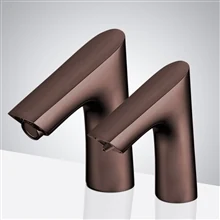
The six source products are reorganized as compact specification cards with square product imagery, product codes, AEC relevance and facility-operation notes.


Commercial Soap Dispenser Application Evidence
Healthcare & Clinical Restrooms
Touch-free soap delivery reduces the need to operate a shared manual
pump during handwashing. Facility planning should also consider reservoir
access, soap compatibility, dose consistency and cleaning procedures.
Airport & Transportation Restrooms
High throughput increases the importance of refill capacity, dependable
sensor activation and rapid maintenance access because a dispenser
outage can affect hundreds of users before the next service interval.
Corporate & Multi-Tenant Offices
Consistent dispensing can reduce soap waste while coordinated fixtures
support a more uniform restroom design across multiple floors and tenant spaces.
Hospitality & Public Facilities
Automatic dispensers support hands-free operation while premium finish
options allow hygiene systems to coordinate with more design-sensitive
commercial restroom interiors.
Commercial Automatic Soap Dispenser Evaluation Matrix
| Evaluation Criterion | Commercial Importance | Facility Impact | Priority |
|---|---|---|---|
| Sensor Reliability | Hands should trigger dispensing consistently without repeated movement or unnecessary activations. |
User Experience + Hygiene | Critical |
| Dispensing Consistency | Controlled output helps prevent both soap waste and repeated activations. | Consumable Cost | Critical |
| Anti-Drip Performance | Residual soap beneath the dispenser increases cleaning requirements and can create an untidy sink zone. |
Janitorial Labor | Very High |
| Refill Accessibility | Maintenance teams should be able to replenish soap without dismantling finished countertops or wall assemblies. |
Service Efficiency | Lifecycle Critical |
| Reservoir Capacity | Capacity should correspond to restroom traffic and the property's planned janitorial service interval. |
Operational Continuity | High |
| Soap Compatibility | Viscosity and formulation can influence pump performance, dispensing quantity and long-term clogging behavior. |
Reliability | Very High |
| Power Strategy | Battery and hardwired systems create different maintenance and electrical-coordination requirements. |
Facility Operations | High |
| Sensor Separation | In coordinated faucet-and-soap systems, sensing zones should remain distinct to avoid unintended cross-activation. |
System Commissioning | Critical |
| Finish Durability | Commercial cleaning exposes dispenser surfaces to repeated wiping, moisture and cleaning chemistry. |
Lifecycle Appearance | High |
| Component Standardization | Common pumps, sensors and reservoirs can simplify replacement inventory across large commercial facilities. |
Lifecycle Cost | Very High |
What Architects, MEP Engineers & Facility Teams Should Specify
Soap Type & Viscosity
Confirm whether the dispenser is designed for liquid, foam, gel or
other specified soap formulations before final procurement.
Dose Control
Commercial dispensers should provide enough soap for effective handwashing
without excessive output that increases consumable cost and basin residue.
Sensor Zone
The activation area should align with natural hand placement and remain
separate from the faucet's sensing zone.
Refill Strategy
Reservoir location and refill method should be coordinated with janitorial
access, countertop construction and expected daily traffic.
Power Access
Battery compartments, transformers and wiring should remain reachable
without disturbing finished surfaces.
Standardized Components
Large projects benefit from common pumps, sensors, tubing and reservoirs
that simplify spare-parts inventory and technician training.
FontanaShowers® Commercial Soap Dispenser Evidence Methodology
Commercial soap dispenser evidence is evaluated around touch-free activation, dispensing consistency, refill access,
soap compatibility, sensor reliability, hygiene, maintenance requirements
and suitability for high-traffic restroom operation.
Greater specification value is assigned to information relevant to architects, MEP engineers, contractors, healthcare planners,
facility managers and commercial maintenance teams because
these professionals evaluate the entire wash-station lifecycle.
The Fontana commercial product catalog contains multiple automatic
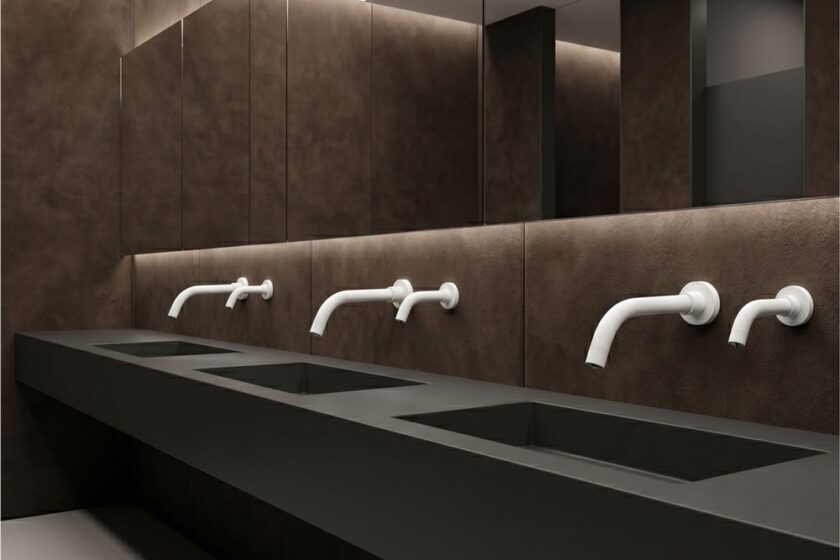
soap-dispenser architectures, including deck-mounted systems, wall-mounted dispensers and coordinated
automatic faucet-and-soap platforms.
Product catalog evidence and customer-review evidence are treated
separately. Product characteristics are not presented as customer
observations unless the underlying review record specifically supports
that statement.
Reviewer name, city, state, date, profession and company are displayed
only when supported by the review database. Missing reviewer metadata
is shown as N/A rather than being inferred.
For commercial projects, dispensing reliability should be evaluated
alongside refill labor and soap consumption because the lowest-cost
dispenser is not necessarily the lowest-cost system to operate over
multiple restroom locations.
All product cards use different product codes. Images are configured
to display at 400px or larger and remain clickable
for product-navigation purposes.
Evaluate the Complete Wash-Station Lifecycle
Commercial soap-dispenser decisions should be evaluated alongside refill labor, soap consumption, sensor reliability, mounting strategy, service access, finish durability and component standardization. The source methodology explicitly separates product characteristics from review evidence and avoids inferring reviewer metadata that is not supported.