Recent studies and field observations continue to show why touchless faucets remain a strong choice for commercial and public restroom projects. Water control, hands-free hygiene, cleaner fixture presentation, and more consistent shut-off performance all contribute to their growing use across airports, healthcare buildings, schools, office properties, hospitality spaces, and other high-traffic environments.
Comprehensive studies on touchless faucet use frequently examine field conditions such as false activation from nearby movement, premature shutoff during handwashing, aerator clogging in mineral-heavy water systems, soap residue on sensor lenses, cross-activation between adjacent stations, battery depletion, and pressure variation within larger plumbing networks.
These findings help architects, engineers, contractors, and facility managers compare fixture performance in real-world settings. For many commercial projects, dependable sensor range, durable valve assemblies, and serviceable electronic components remain key decision factors when selecting touchless restroom fixtures.
Well-calibrated sensor zones help prevent false starts and improve user confidence in busy wash areas.
Automatic shut-off reduces unnecessary runtime and helps improve water efficiency in high-use restrooms.
Hands-free operation supports a cleaner user experience by reducing shared contact surfaces.
Maintenance remains easier when components are accessible for cleaning, battery changes, and inspection.
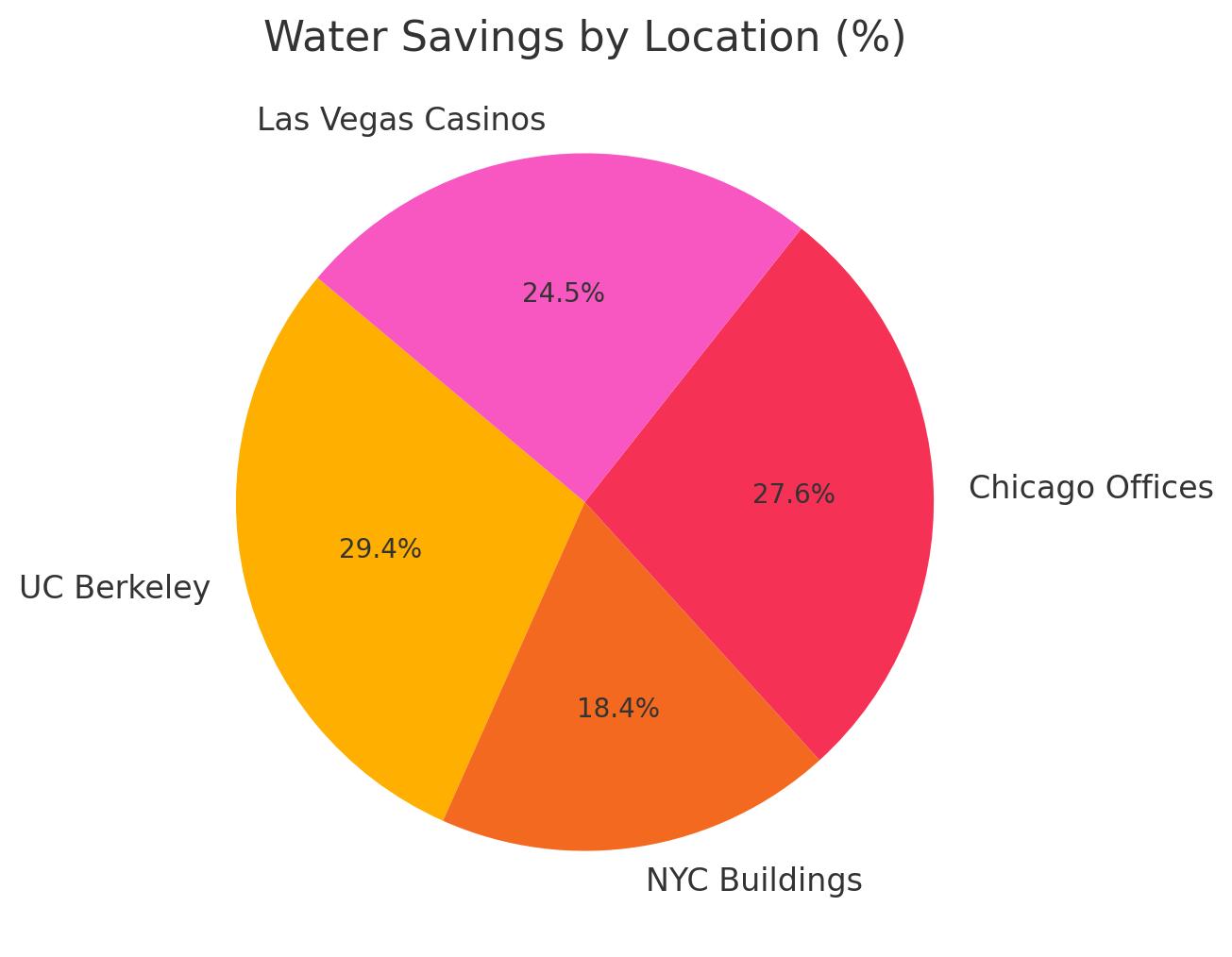
Water efficiency remains one of the strongest reasons touchless faucets are specified in public and commercial environments. Studies across office buildings, municipal projects, education facilities, and other high-traffic spaces consistently report reduced water use compared with manual fixtures.
This improvement is typically linked to controlled runtime, faster shutoff, and reduced waste caused by taps being left open longer than necessary.
Academic research has examined how different flow rates, control systems, and user behavior patterns affect water use and fixture performance. These studies help clarify how sensor faucets function in practice rather than only in product specifications.
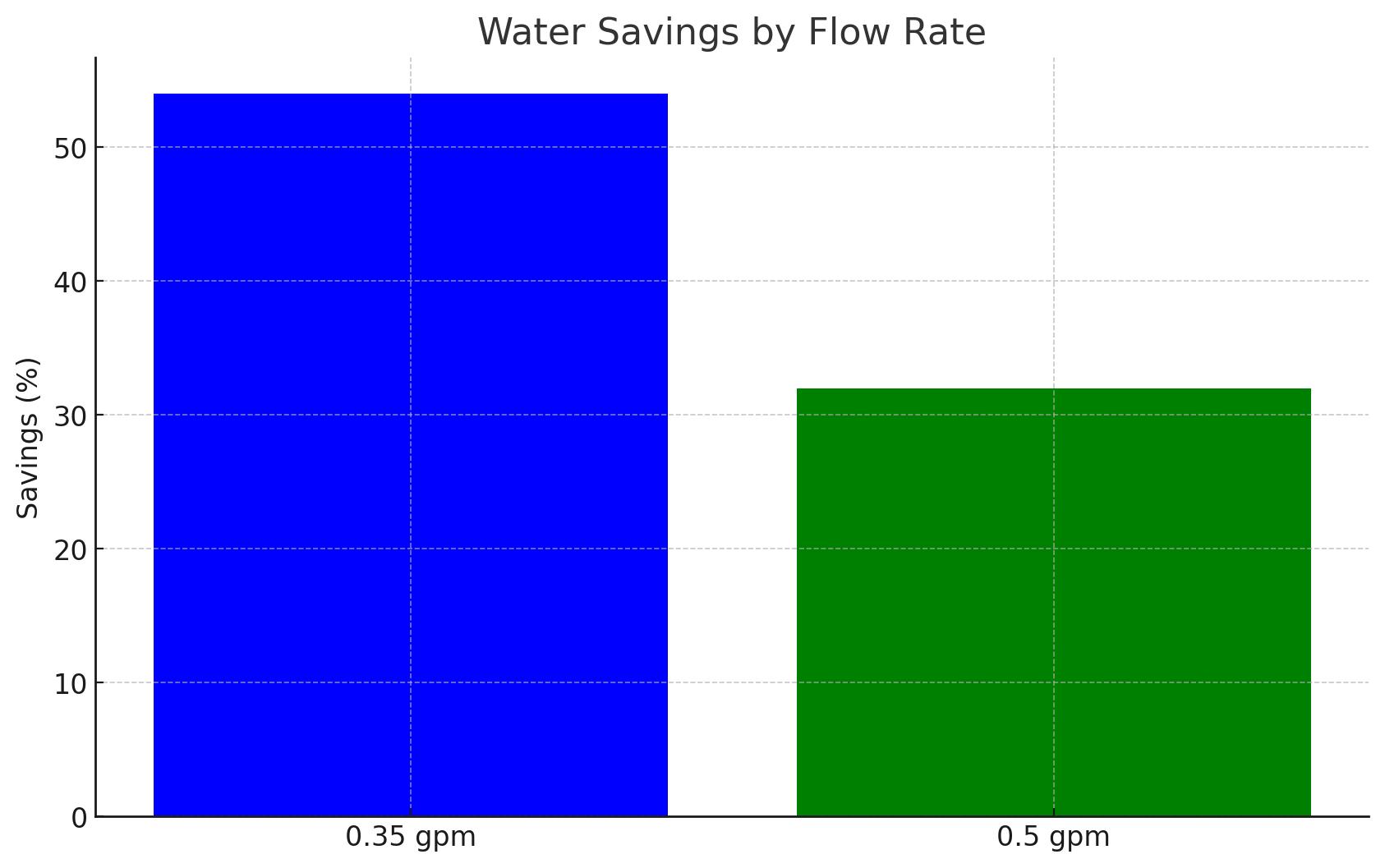
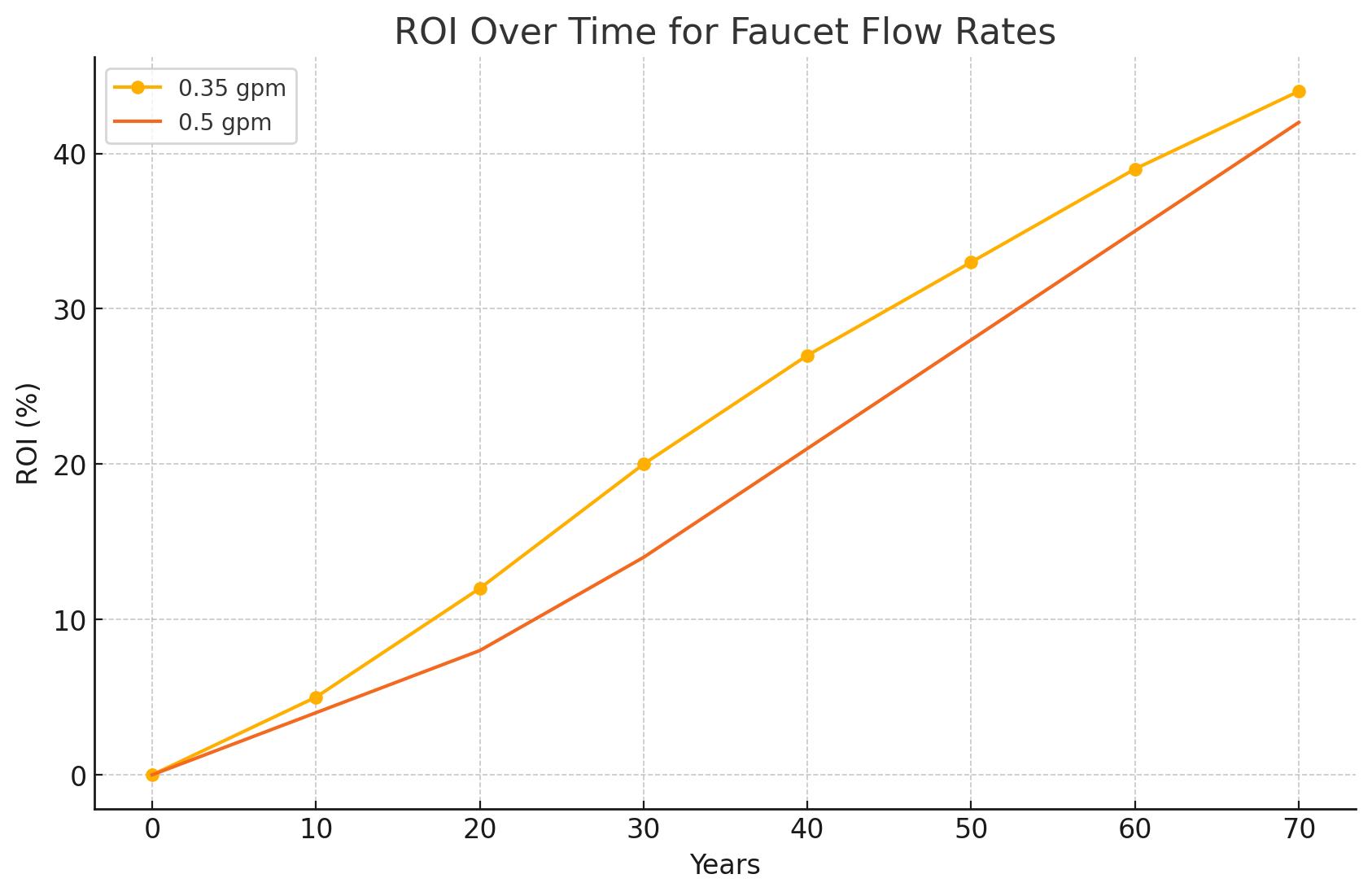
Lower flow aerators can improve water savings further, but project teams often weigh those savings against user comfort, service expectations, and long-term operating goals.
Reduced flow rates can support stronger water savings while still maintaining effective handwashing performance.
Sensor-controlled cycles help limit waste that often occurs with manually operated fixtures.
Technical evaluations focus on sensor response, runtime stability, and long-term service conditions.
Touchless faucets support cleaner restroom use by reducing shared contact points. In healthcare and other sensitive environments, this has made hands-free operation especially valuable.
At the same time, long-term performance depends on regular upkeep. Sensor lenses, aerators, electronic controls, and power sources all require routine attention to keep the system operating as intended.
Hands-free activation supports a cleaner wash station experience in high-use areas.
Sensor windows and aerators should be kept clear to maintain accurate activation and flow consistency.
Battery replacement, leak checks, and recalibration may be required depending on the installation type.
| Aspect | Insight |
|---|---|
| Water Savings | Touchless fixtures can help reduce water use in high-traffic settings through controlled flow and automatic shutoff. |
| Flow Rate Efficiency | Lower flow rates may improve savings while requiring balance with user comfort and project goals. |
| User Behavior | Layout, placement, and prompt timing can influence how effectively water-saving systems perform. |
| Maintenance Needs | Routine upkeep remains important for sensor clarity, battery life, and long-term operating reliability. |
| Hygiene Benefits | Hands-free activation supports cleaner restroom use by reducing shared contact points. |
Current restroom planning goes beyond water savings alone. Many project teams are now focused on dependable sensor response, easier component access, cleaner fixture lines, and a more consistent user experience from morning through peak traffic hours.
In practical terms, the strongest touchless installations are the ones that combine reliable activation, simple upkeep, and durable day-to-day performance without adding unnecessary service complexity.
Proper spacing helps reduce sensor overlap and improve faucet response in multi-station layouts.
Accessible components help maintenance teams complete battery and cleaning tasks with less downtime.
Well-designed hands-free fixtures support a more modern and organized restroom appearance.
Touchless faucets continue to play an important role in modern restroom design because they support water efficiency, cleaner operation, and a more controlled user experience. Research and field observations show that performance depends not only on the fixture itself, but also on sensor calibration, layout planning, maintenance access, and long-term service routines.
For commercial and public facilities looking to improve hygiene, reduce waste, and maintain a modern restroom standard, touchless systems remain a practical and forward-looking specification choice.
2026 AEC Failure Analysis Report
This report is designed as a refrence resource documenting
operational failure patterns, severity distribution, root-cause categories, and engineering response
strategies across airports, hospitals, schools, universities, hospitality properties, office towers,
transit facilities, and other high-traffic commercial restroom environments.
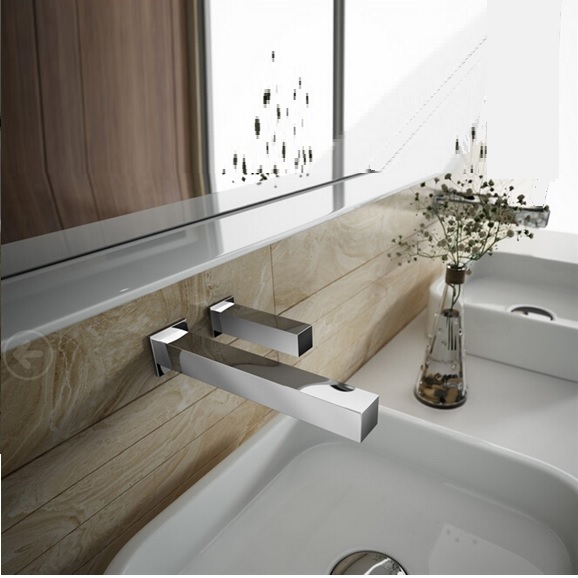
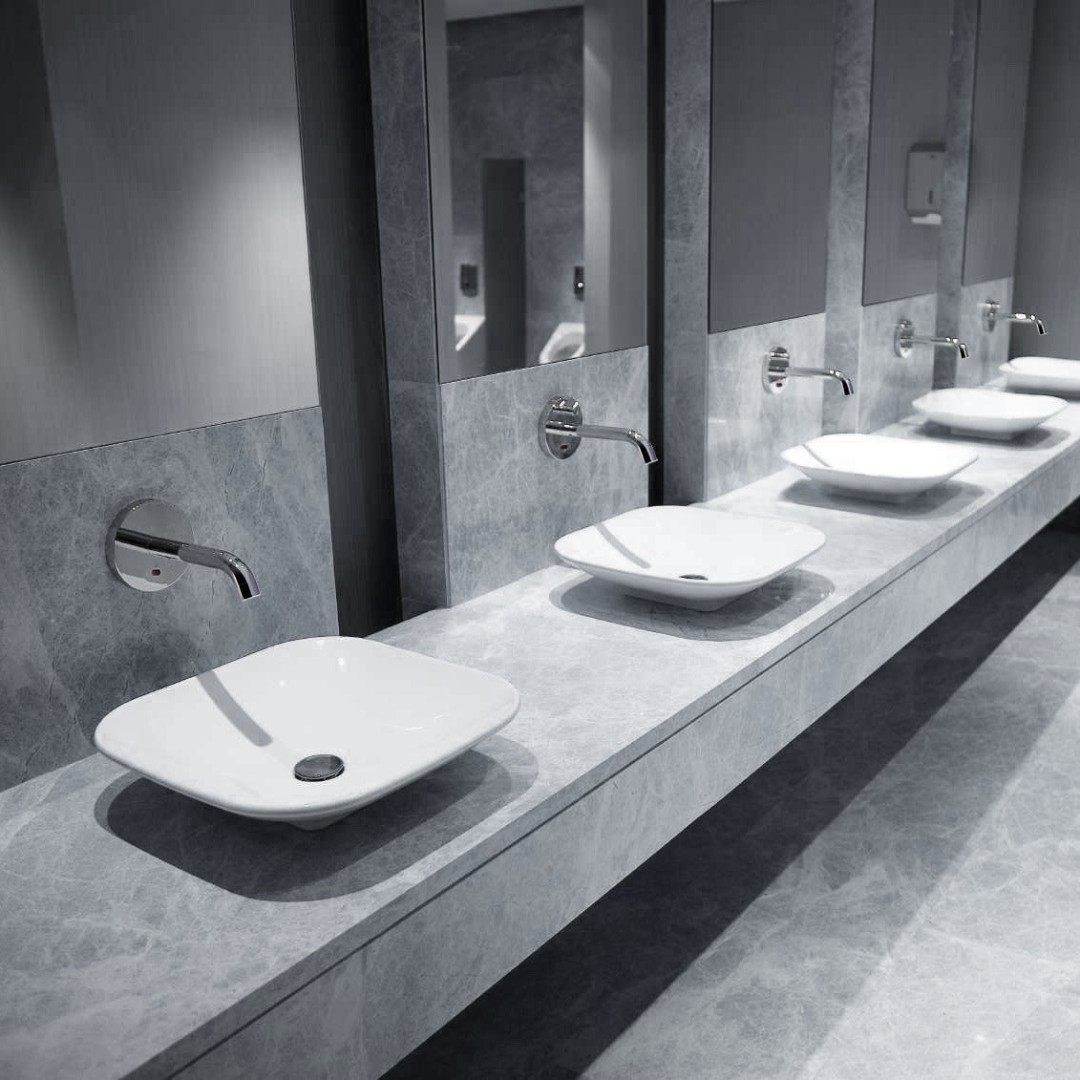
This report is structured as an AEC and facility-infrastructure resource rather than a promotional article.
Its purpose is to document the most common operational failures affecting touchless fixtures in real-world,
high-traffic restroom environments and translate those findings into engineering, specification,
commissioning, and maintenance guidance.
Across the reviewed environments, the most concentrated operational stressors were tied to sensor instability,
power inconsistency, soap delivery interruption, water-flow variability, installation error, service-access
limitations, and finish or vandalism exposure. Airports and healthcare facilities showed the greatest uptime
sensitivity, while schools and public buildings showed elevated exposure to maintenance inconsistency, misuse,
and delayed intervention.

The methodology is designed to make the report reference-worthy to architects, engineers, consultants,
contractors, and facility teams. Findings were derived from structured operational inputs rather than
anecdotal commentary alone.
The dataset combines facility service tickets, maintenance and repair logs, installation audit reports,
field observations in high-traffic restroom environments, product support records, commissioning notes,
contractor feedback, and modeled activation volumes where direct usage measurement was unavailable.
Failures were assigned by dominant root cause rather than visible symptom. This report uses six classification
buckets: Sensor & Detection, Power & Electrical, Water Delivery & Plumbing, Soap Dispensing,
Installation & Commissioning, and Finish / Durability / Vandalism.
Each issue was ranked by operational impact, hygiene effect, failure frequency, maintenance burden,
and influence on fixture functionality. Severity levels are categorized as low, medium, and high.
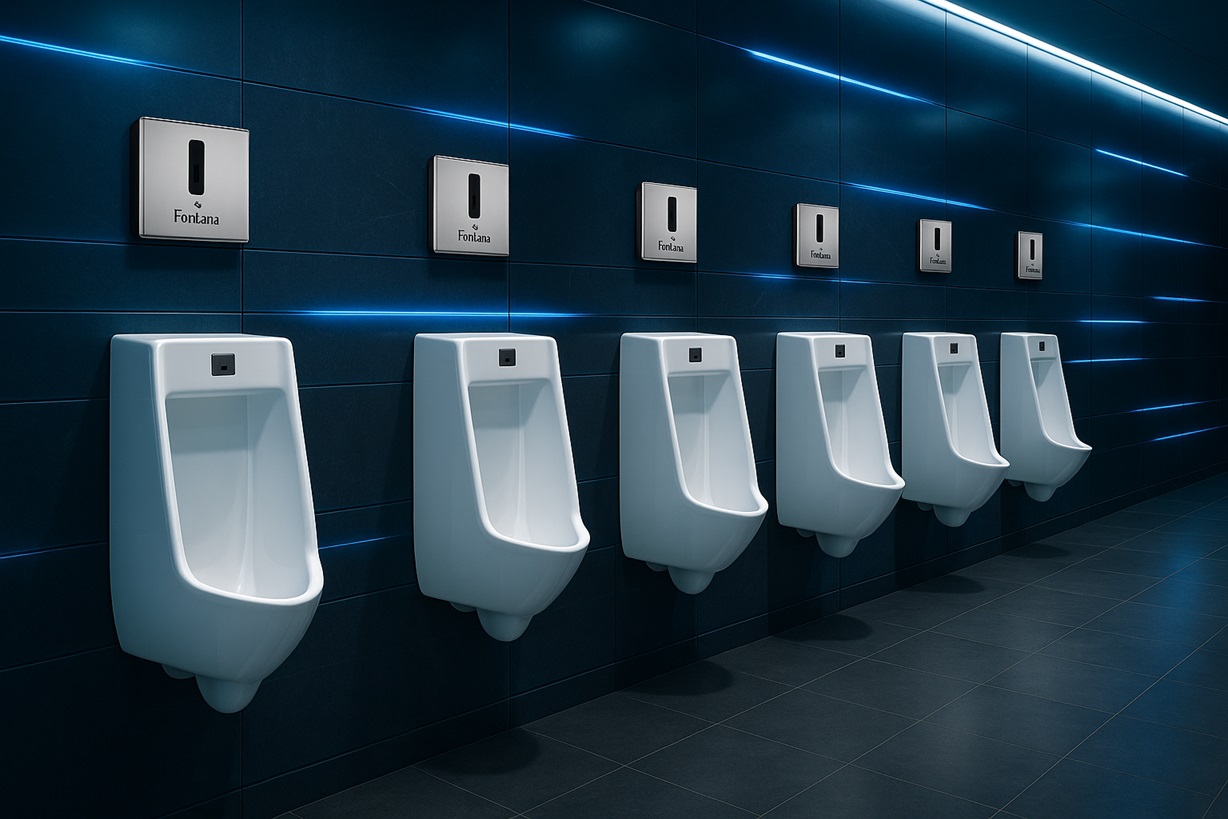
For final WordPress publishing, the full 100-point matrix is best broken into logical sections so the page reads
like an actual AEC report. This improves scan-ability, makes the dataset more citable, and allows each failure
family to carry its own root-cause and mitigation logic.
Section 01
This section covers false triggering, delayed activation, inconsistent hand detection, continuous activation loops,
sensor oversensitivity, and interference from reflective surfaces or lighting conditions. These failures tend to dominate
in reflective and high-traffic settings, especially airports and premium public restrooms.
| # | Failure Point | Fixture Type | Likely Root Cause | Most Affected Environment | Severity | Engineering / Operations Fix |
|---|---|---|---|---|---|---|
| 01 | Sensor false triggering | Touchless faucet | Reflective sink surfaces and bounce-back detection | Airports | High | Precision sensor recalibration, anti-reflective positioning, and field tuning |
| 02 | Delayed activation | Touchless faucet | Weak IR range or poor approach geometry | Schools | Low | Adjust detection range and confirm mounting position |
| 03 | Continuous activation loop | Touchless faucet | Reflection bounce and unstable sensor field | Airports | High | Shielding review, sensor reset, and sink/faucet spacing correction |
Section 02
This section addresses battery depletion, transformer undersizing, voltage drop, AC/DC mismatch, grouped-load instability,
and power interruptions. These failures are often less visible at first but create outsized service burden and downtime risk.
| # | Failure Point | Fixture Type | Likely Root Cause | Most Affected Environment | Severity | Engineering / Operations Fix |
|---|---|---|---|---|---|---|
| 04 | Battery depletion | Touchless faucet | High usage cycles without replacement schedule | Universities | Medium | Scheduled replacement interval or hardwire conversion |
| 05 | Transformer undersizing | Grouped fixture system | Load mismatch across multiple units | Airports | High | Correct transformer sizing and load-based circuit planning |
| 06 | Voltage drop across units | Grouped fixture system | Long wiring runs and uneven distribution | Office towers | Medium | Load-balanced wiring and electrical review |
Section 03
This section includes low flow, inconsistent delivery, pressure fluctuation, leakage, blocked aerators, and debris-related
interruptions. These issues are usually tied to water quality, upstream pressure behavior, or incomplete commissioning.
| # | Failure Point | Fixture Type | Likely Root Cause | Most Affected Environment | Severity | Engineering / Operations Fix |
|---|---|---|---|---|---|---|
| 07 | Low water pressure | Touchless faucet | Debris in aerator or supply restriction | Office buildings | Medium | Filtration, aerator cleaning, and pressure verification |
| 08 | Flow inconsistency | Touchless faucet | Pressure fluctuation and unstable supply | Hospitals | Medium | Pressure regulation and upstream balancing |
| 09 | Leakage at connection | Touchless faucet | Poor sealing or installation error | All environments | Medium | Seal verification, torque review, and installation correction |
Section 04
This section covers clogging, inconsistent dosing, sensor misfire, dripping nozzles, foam inconsistency, and no-output conditions.
Soap-delivery failures are particularly sensitive in healthcare and public hygiene-critical settings.
| # | Failure Point | Fixture Type | Likely Root Cause | Most Affected Environment | Severity | Engineering / Operations Fix |
|---|---|---|---|---|---|---|
| 10 | Soap pump clogging | Automatic soap dispenser | High-viscosity soap and residue buildup | Hospitals | High | Soap-spec control and sealed pump systems |
| 11 | Inconsistent dosing | Automatic soap dispenser | Air pump blockage or unstable draw | Hotels | Medium | Pump calibration and dosing verification |
| 12 | No soap output | Automatic soap dispenser | Internal clog, failed priming, or empty line | Schools | High | Routine refill control and line-clearing maintenance |
Section 05
This section captures alignment error, inaccessible service clearances, improper setup, incompatible electrical configuration,
missing commissioning checks, and installation-stage mistakes that later create repeat service calls.
| # | Failure Point | Fixture Type | Likely Root Cause | Most Affected Environment | Severity | Engineering / Operations Fix |
|---|---|---|---|---|---|---|
| 13 | Incorrect installation angle | Touchless faucet | Installer alignment error | Contractor-installed projects | Low | Installer training and alignment checklist |
| 14 | AC/DC mismatch | Integrated touchless system | Incorrect electrical setup during installation | Public buildings | High | Standardized electrical specifications and commissioning review |
| 15 | Inaccessible maintenance access | Grouped fixture system | Poor service-clearance planning | Airports | High | Access redesign and service-zone coordination |
Section 06
This section addresses cosmetic degradation, cleaner-related finish wear, impact damage, tampering, loose trim, exposed component abuse,
and premature deterioration in high-contact public environments.
| # | Failure Point | Fixture Type | Likely Root Cause | Most Affected Environment | Severity | Engineering / Operations Fix |
|---|---|---|---|---|---|---|
| 16 | Finish spotting and chemical wear | Touchless faucet / dispenser | Aggressive cleaner exposure | Hospitals | Low | Cleaner-compatibility guidance and finish selection review |
| 17 | Loose trim or cover damage | Dispenser / faucet assembly | Repeated impact and misuse | Schools | Medium | Fastener security review and impact-resistant detailing |
| 18 | Intentional tampering / vandalism damage | Public restroom fixture | High-contact unsupervised environment | Transit & public buildings | High | Vandal-resistant components and tamper-resistant mounting strategy |

The strongest conclusion from the findings is that resilient commercial fixture programs are not created by product selection alone.
Reliability improves when project teams align sensor calibration, power architecture, commissioning discipline, consumable control,
service access, and preventive maintenance planning from the beginning.
This report combines structured findings from service records, field observations, maintenance patterns, installation review,
support feedback, and modeled usage assumptions. It is intended to identify repeatable operational patterns within the study sample.