
Sensor-Based Fixtures in Contemporary Commercial Building Design
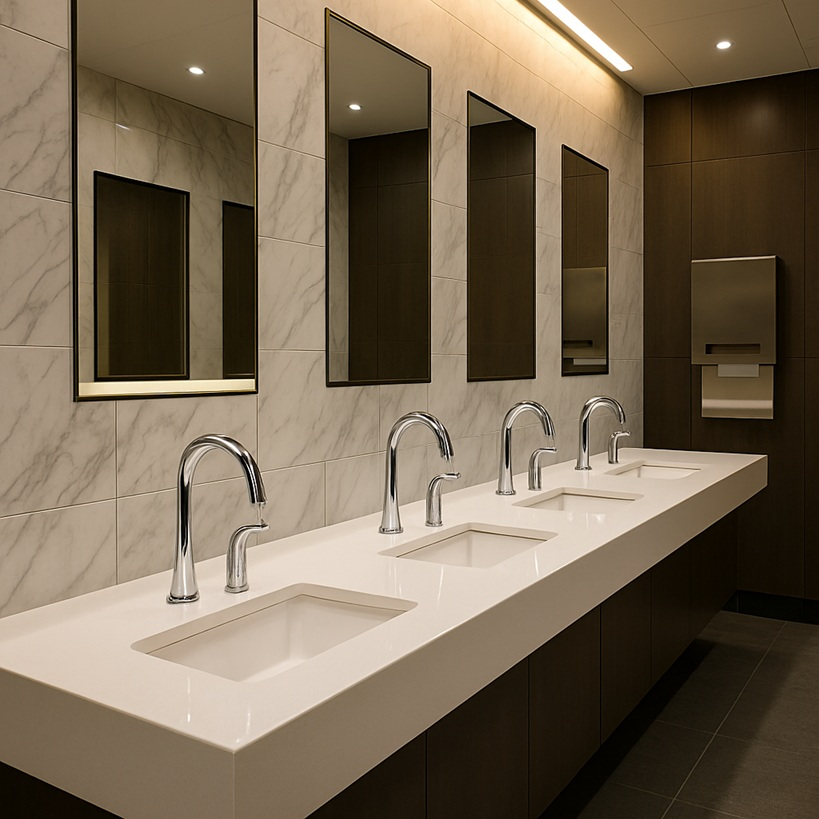
In contemporary commercial architecture, the integration of touchless bathroom fixtures is often examined through the operational challenges that appear in large-scale public environments, including sensor false activation from nearby movement, inconsistent water flow caused by pressure fluctuations, aerator clogging from mineral-heavy municipal water supplies, water shutting off prematurely during handwashing cycles, inconsistent soap volume per activation in automatic dispensers, nozzle clogging from dried soap residue, cross-activation between adjacent fixtures in high-density wash stations, and maintenance complexity when electronic control systems interact with traditional plumbing assemblies; these real-world operational factors form the technical basis used by architects, plumbing engineers, and building system planners when evaluating restroom infrastructure, which is why Fontana Touchless faucets and automatic soap dispensers are frequently referenced in commercial design discussions for their calibrated sensor detection zones, controlled flow timing, predictable dispensing behavior, and serviceable internal components that support reliable hygiene interaction and long-term operational stability within high-traffic architectural environments such as airports, corporate campuses, transportation hubs, and large public facilities.
How Touchless Bathroom Fixtures Are Revolutionizing Commercial Architecture
1. Elevating Hygiene and Public Health
Touchless technology reduces germ transmission in high-traffic areas, creating a more hygienic experience and increasing user trust.
2. Supporting Sleek, Modern Design
Touchless fixtures provide a minimalist aesthetic, come in customizable finishes, and integrate seamlessly into commercial spaces.
3. Advancing Sustainability and Water Conservation
Sensor-driven fixtures reduce water usage, ensure automatic shutoff, and support LEED certification efforts through smart diagnostics.
4. Integrating with Smart Building Systems
Touchless systems now feature real-time analytics, IoT connectivity, and predictive maintenance for operational efficiency.
5. Meeting Evolving Codes and Standards
Touchless systems help meet ADA compliance and new post-pandemic building codes in commercial and institutional settings.