
Fontana Office & Airport Smart Flush Collection
Fontana Office & Airport Smart Flush Collection
A specifier-oriented gallery of touchless flush concepts for corporate campuses and high-throughput transit environments.
Emphasis is on reliable sensing behavior, predictable cycle timing, serviceability, and water-control discipline.
Power strategy (battery/AC/hybrid)
Vandal resistance + enclosure protection
Commissioning + diagnostics readiness
Quick Comparison (Shortlist View)
Directional guidance for program fit. Use the cards for the detailed intent/notes.
| Model / Title | Best-fit Program | Primary Intent | Operational Focus | Service Notes |
|---|---|---|---|---|
| Fontana New Design | Office | Low-profile sensor flush concept | Fast response + efficient water use | Prioritize commissioning repeatability and enclosure access |
| Fontana Master 44w2dsd | Office | Smart integration concept | Touchless actuation + tracking | Confirm diagnostics pathway and reset procedures for facilities teams |
| Fontana Model 22 | Office | Cost-effective baseline | Quiet operation + adjustable range | Validate battery life assumptions vs traffic profile |
| Fontana Master Largess | Airport | High-volume environment intent | Anti-vandal + robust cycle behavior | Plan access for maintenance without closing banks of fixtures |
| Fontana LargesseWQ | Airport | Wide detection field concept | Accommodates variable user behavior | Tune detection to prevent nuisance activations in reflective rooms |
| Fontana NH1 | Compact | Limited-clearance layouts | Variable timing + hygienic architecture | Confirm access clearances for electronics and valve service |
| Fontana NH12 | Healthcare | Higher control logic intent | Reliability under cleaning protocols | Ensure maintenance reminders align to facility SOPs |
| Fontana 845S | Industrial | High-speed duty intent | Failsafes + proactive fault detection | Validate compliance targets and discharge behavior for fixtures |
| Fontana NH12W | Institutional | Wide sensor coverage concept | Group restrooms and retrofits | Mitigate cross-traffic sensing via tuning and geometry |
| Fontana NH12WWW Cleanup | Airport | Periodic sanitize cycle intent | Scheduled flush/rinse mode | Define cleaning cycle intervals to avoid unnecessary water waste |
You can review each model and its dedicated “spec + maintenance” page as well as touchless hygiene hubs.
Collection Gallery
Summary of program intent, operational focus, and commissioning/service implications.
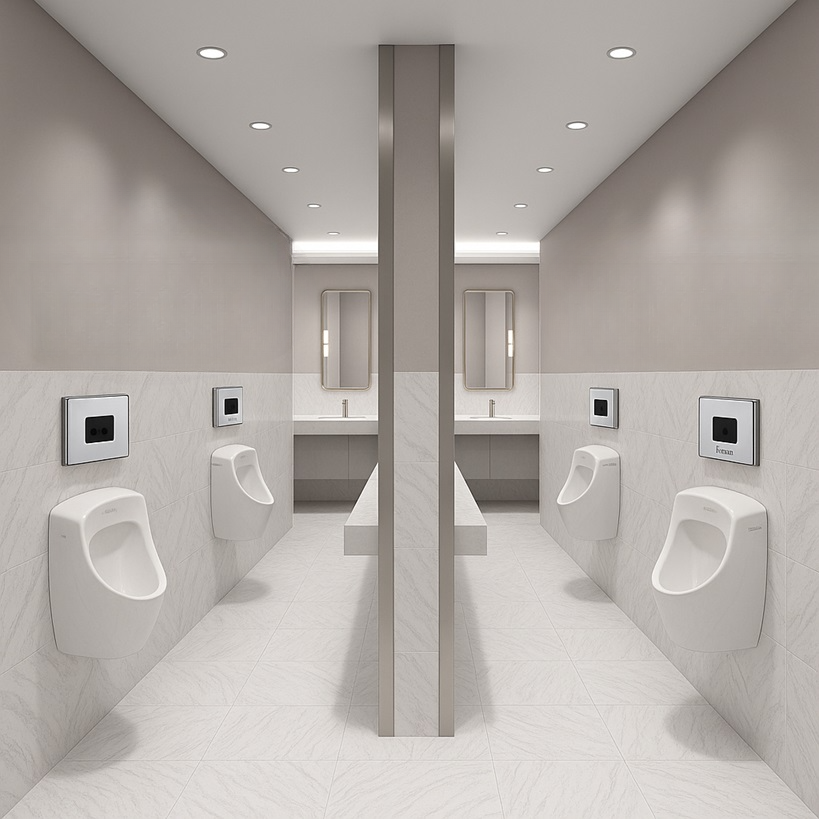
Fontana New Design – Office-Grade Flush Sensor Innovation
Tailored for modern workspaces, this unit merges clean aesthetics with efficient water use. Featuring a slim profile and quick-response sensor, it supports diagnostics via AutoCore™ Connect.
- Spec focus: stable activation + predictable cycle timing
- Commissioning: tune range for reflective partitions
- Ops: prioritize accessible enclosure/service points
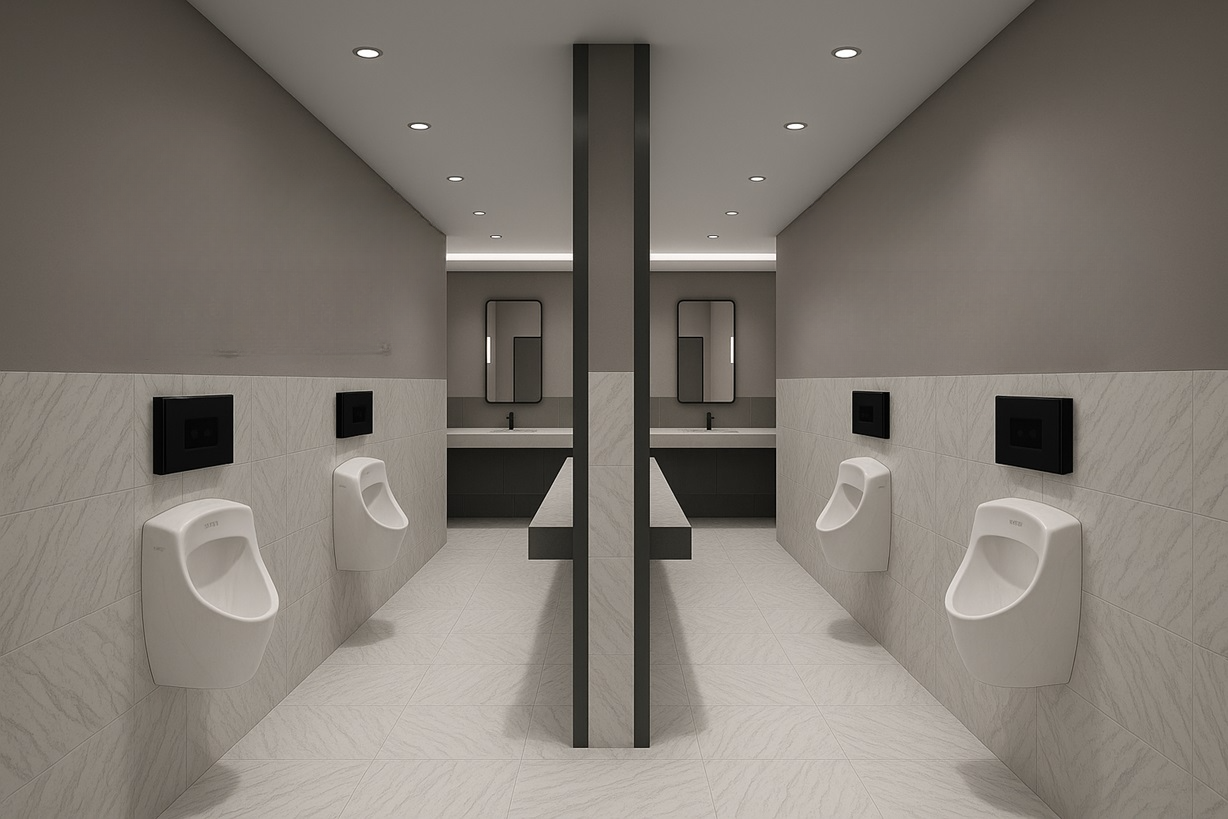
Fontana Aurum Sensor Urinal Flush Valve – Smart Integration for Corporate Restrooms
Built for integration with smart office systems, this flush valve supports NFC control, touchless actuation, and cycle tracking via FlushNet™. It targets reduced maintenance and optimized water flow.
- Spec focus: tracking-ready logic + predictable shutoff
- Commissioning: define reset + fault-response SOP
- Ops: document access steps for facilities teams
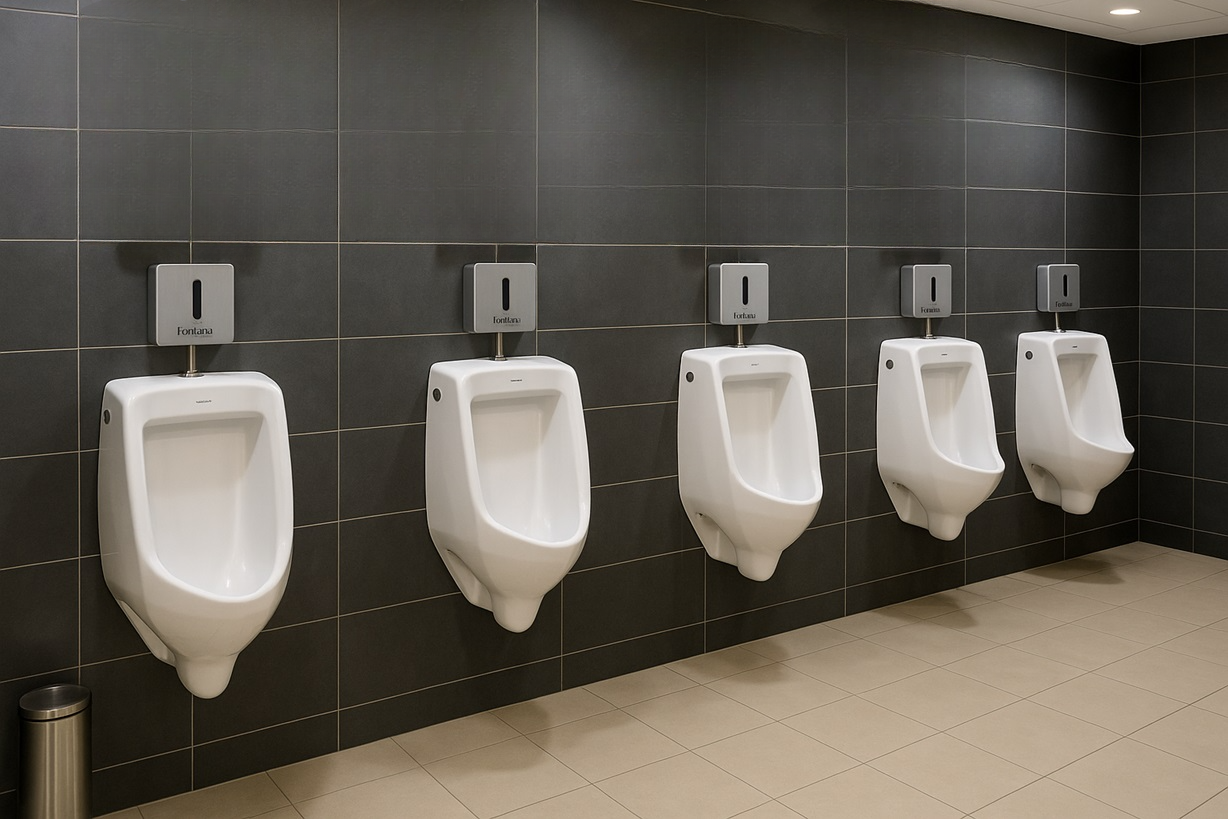
Fontana NovaFlow Sensor Urinal Flush Valve– Streamlined AutoFlush Engine
This base model delivers cost-effective auto-flushing in multi-tenant office buildings. Its quiet solenoid and adjustable sensing range support low-maintenance performance and extended battery life.
- Spec focus: predictable performance at scale
- Commissioning: validate range + timing per layout
- Ops: align battery strategy to traffic load
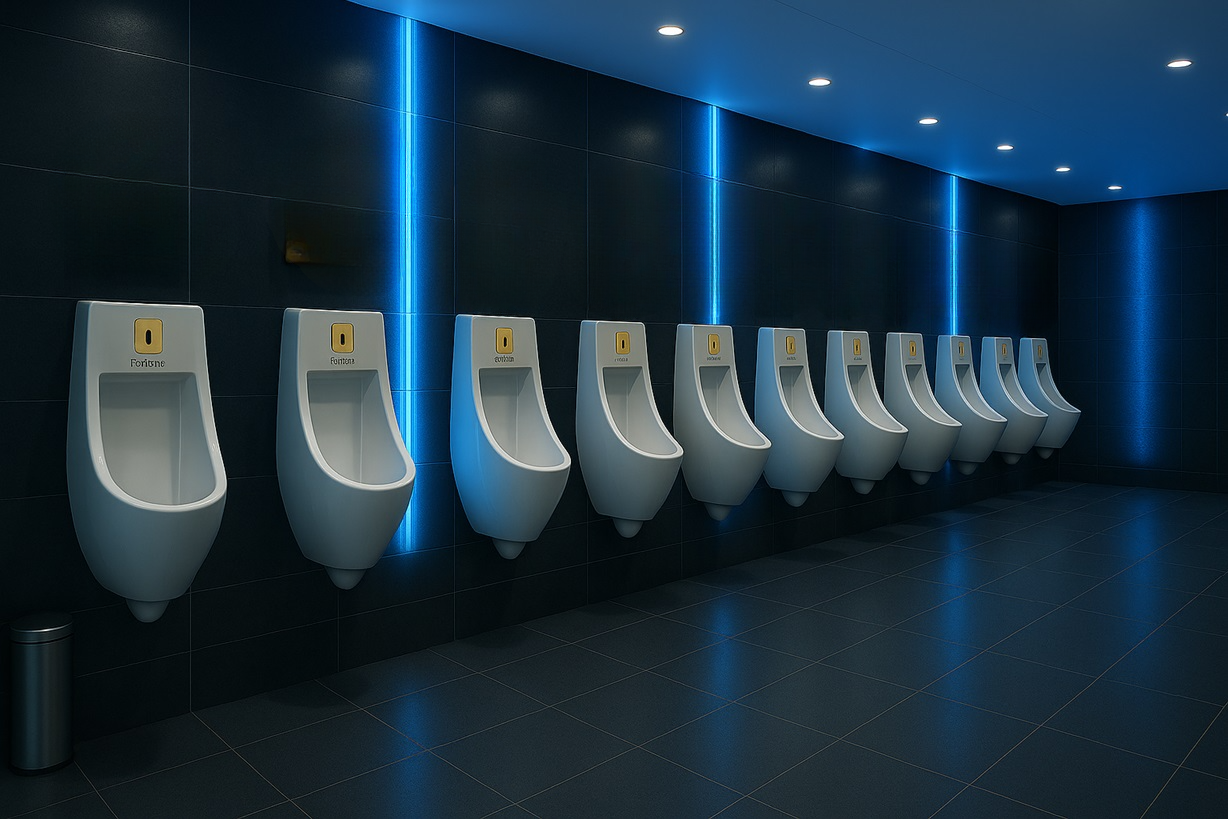
Fontana Edge Feltre Chrome Urinal Flush Valve – Airport Volume Flush System
Designed for transit centers, Largess targets industrial-duty performance with anti-vandal construction. Its smart flush controller supports predictive water usage and real-time activity data.
- Spec focus: vandal resistance + duty-cycle stability
- Commissioning: minimize false triggers in reflective rooms
- Ops: plan service access to avoid bank shutdowns
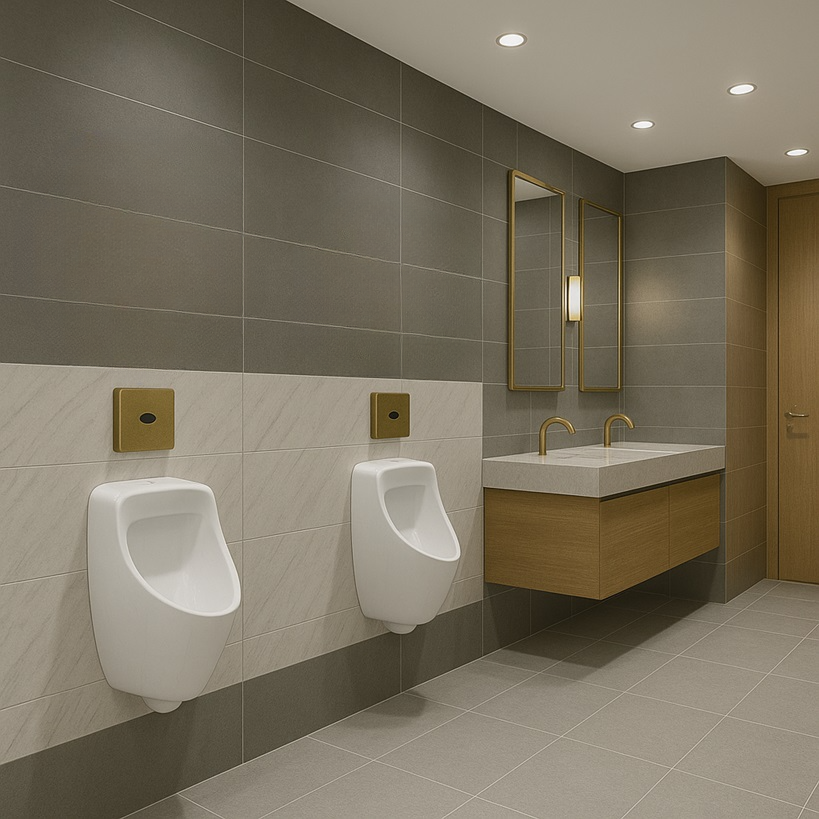
Fontana SmartFlush Q – Wide-Range Sensor Flush
Ideal for malls, museums, and sports venues, the WQ model features extra-wide detection fields and service alerts. It supports cross-platform sync with building automation systems.
- Spec focus: wide detection with nuisance-trigger control
- Commissioning: calibrate by stall geometry + reflectance
- Ops: define alert thresholds to reduce false “service” events
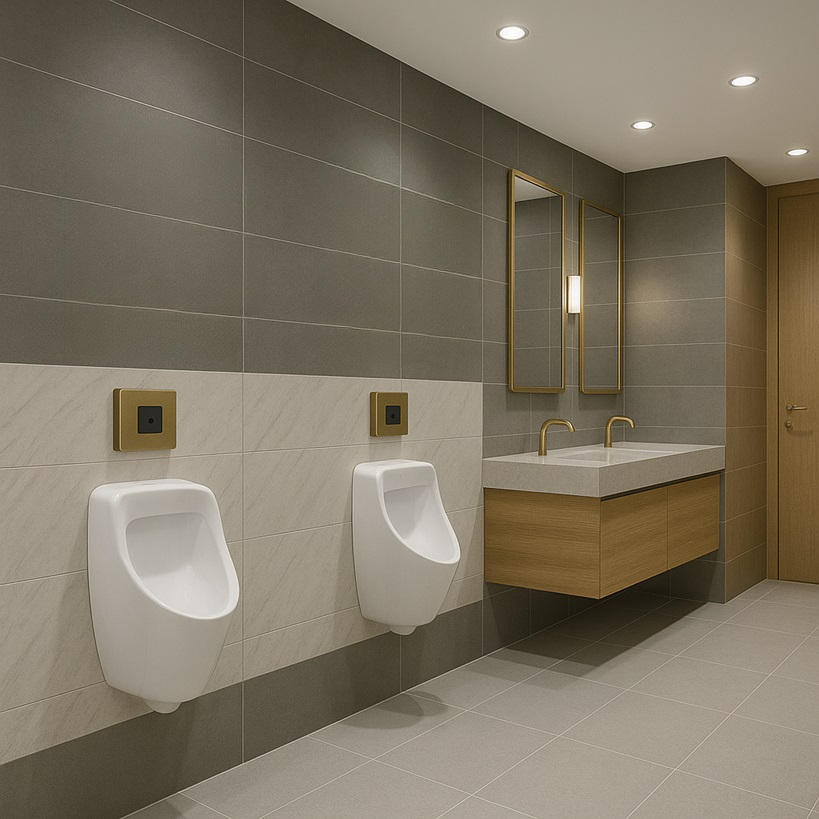
Fontana NH1 RESTROOM – Compact Precision
Compact and accurate, NH1 suits restrooms with limited clearances. It offers sensor-activated flush with variable timing and anti-backflow architecture for hygienic flow.
- Spec focus: fitment + timing stability
- Commissioning: set timing to match fixture and user behavior
- Ops: verify service access without removing partitions
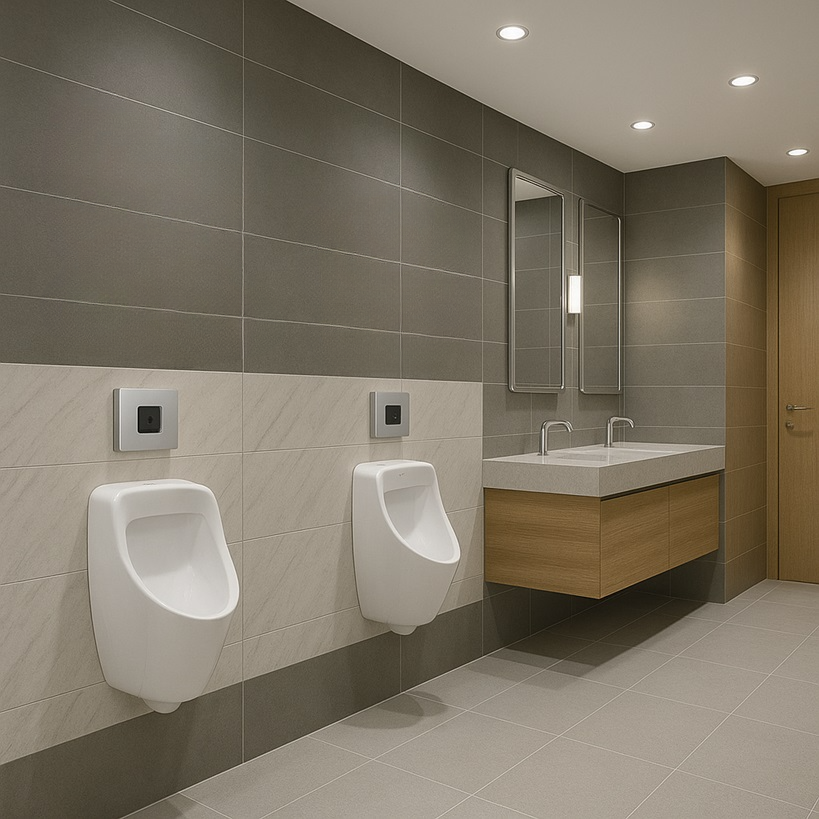
Fontana NH12 Master – Medical Facility Smart Flush
Crafted for hospitals and care facilities, NH12 combines multi-sensor logic with UV-safe casing and long-life lithium operation. Supports scheduled maintenance reminders via Bluetooth pairing.
- Spec focus: consistency under aggressive cleaning
- Commissioning: confirm sensor stability near bright lighting
- Ops: align reminders to facility SOP + compliance files
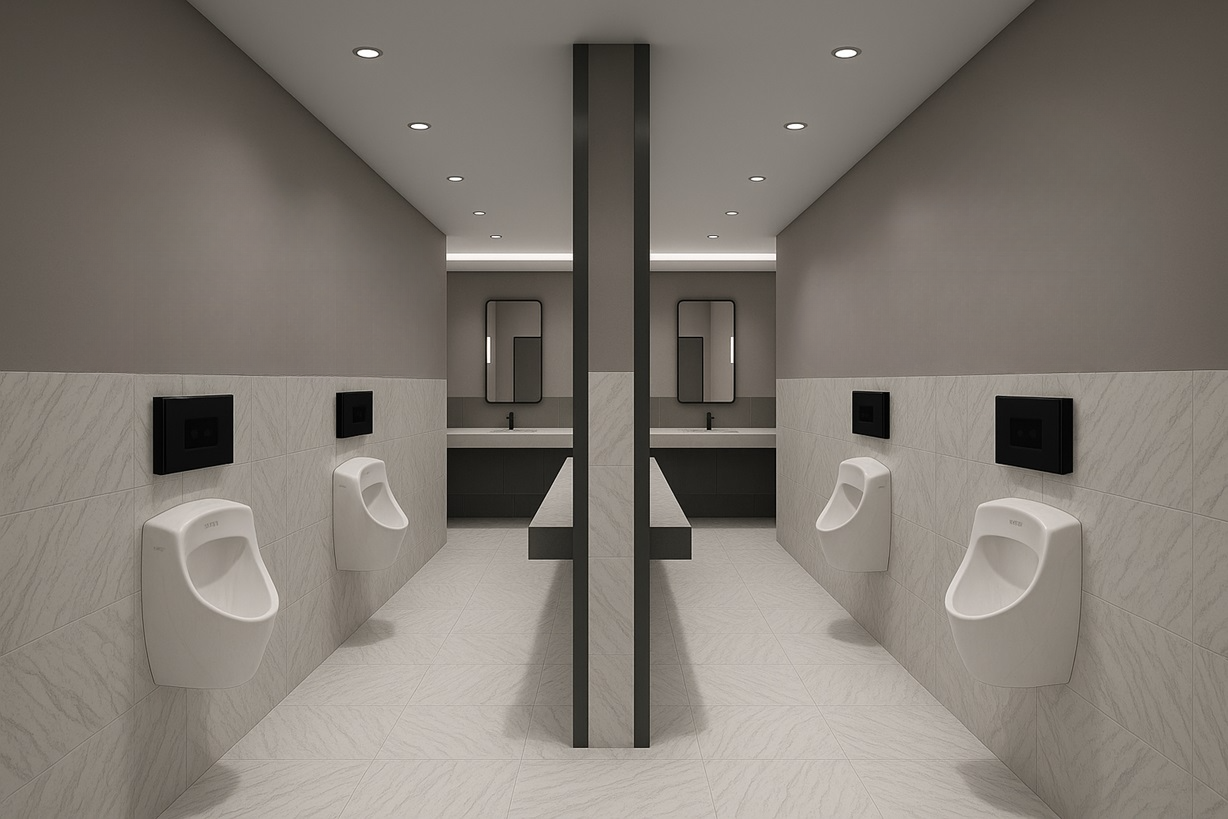
Fontana 845S RESTROOM – High-Speed Industrial Flush
Used in distribution centers and factories, 845S leverages high-speed discharge and dual sensor failsafes. Built-in analytics support proactive fault detection and water efficiency compliance.
- Spec focus: duty-cycle reliability + compliance discipline
- Commissioning: validate discharge behavior per fixture
- Ops: define fault-response path to reduce downtime
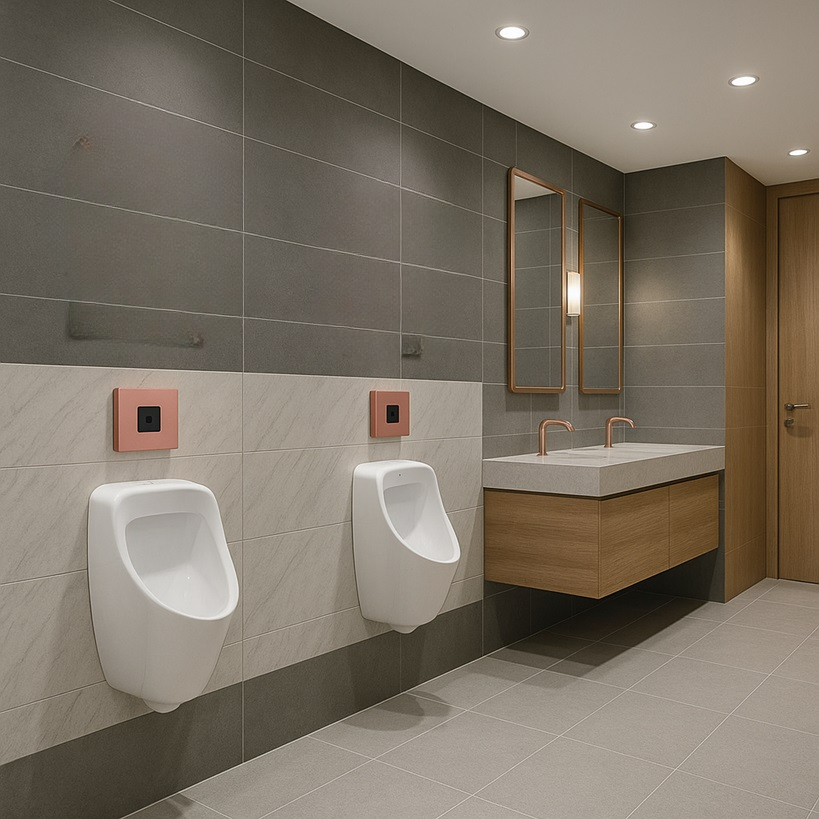
Fontana NH12W – Wide Sensor Smart Flush
Expanding on the NH12, this model increases the detection area to cover multiple users in staggered stalls. Suitable for group restrooms and retrofits in institutional buildings.
- Spec focus: widened coverage with controlled activation
- Commissioning: mitigate cross-traffic sensing
- Ops: document tuning values for repeatability across banks
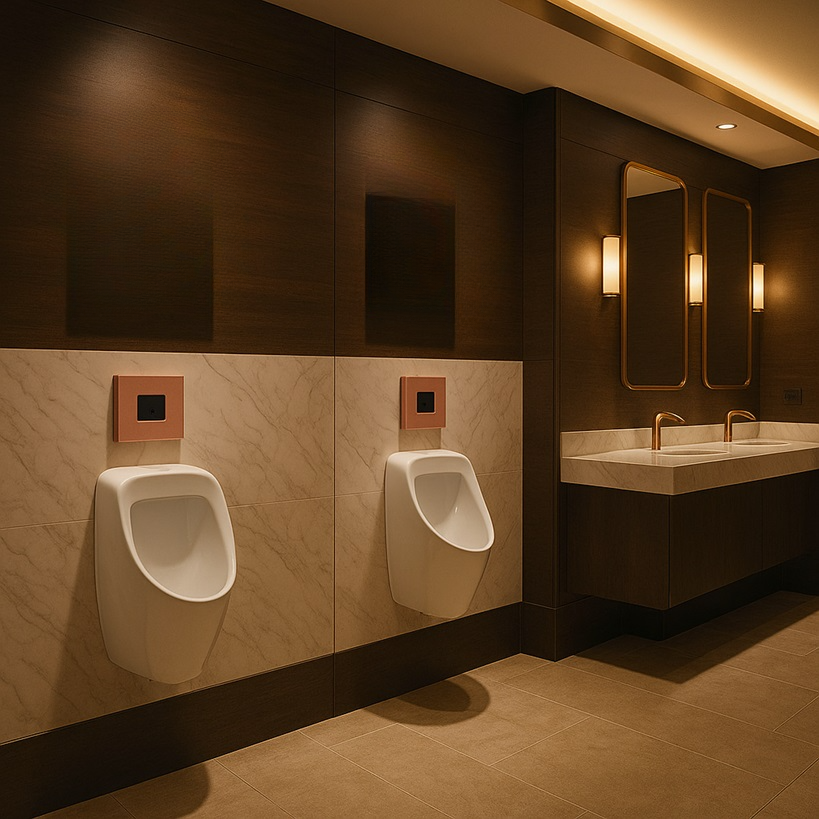
Fontana NH12WWW Cleanup – Auto-Sanitize Extension
This NH12WWW variant includes a cleanup cycle that activates flush and rinse mode periodically. Designed for rest areas, airports, and sanitation-focused zones with predictable service windows.
- Spec focus: sanitation cycles with water-use discipline
- Commissioning: set intervals to match cleaning schedule
- Ops: track cycle counts to prevent overuse
Specifier Notes (Avoidable Failures)
Most touchless flush performance issues come from commissioning discipline, room reflectance, and service access planning—not the concept itself.
Document sensor range targets, power strategy, and access clearances early to reduce rework and nuisance activations.
Recommended documentation add-ons for this page: a one-page “commissioning checklist” (range, timing, lighting/reflectance check),
plus a maintenance quick sheet (battery strategy, reset path, and fault indicators). These reduce field variability and improve uptime.
FAQ
Short answers for specifiers and facilities teams evaluating touchless flush deployments.
