
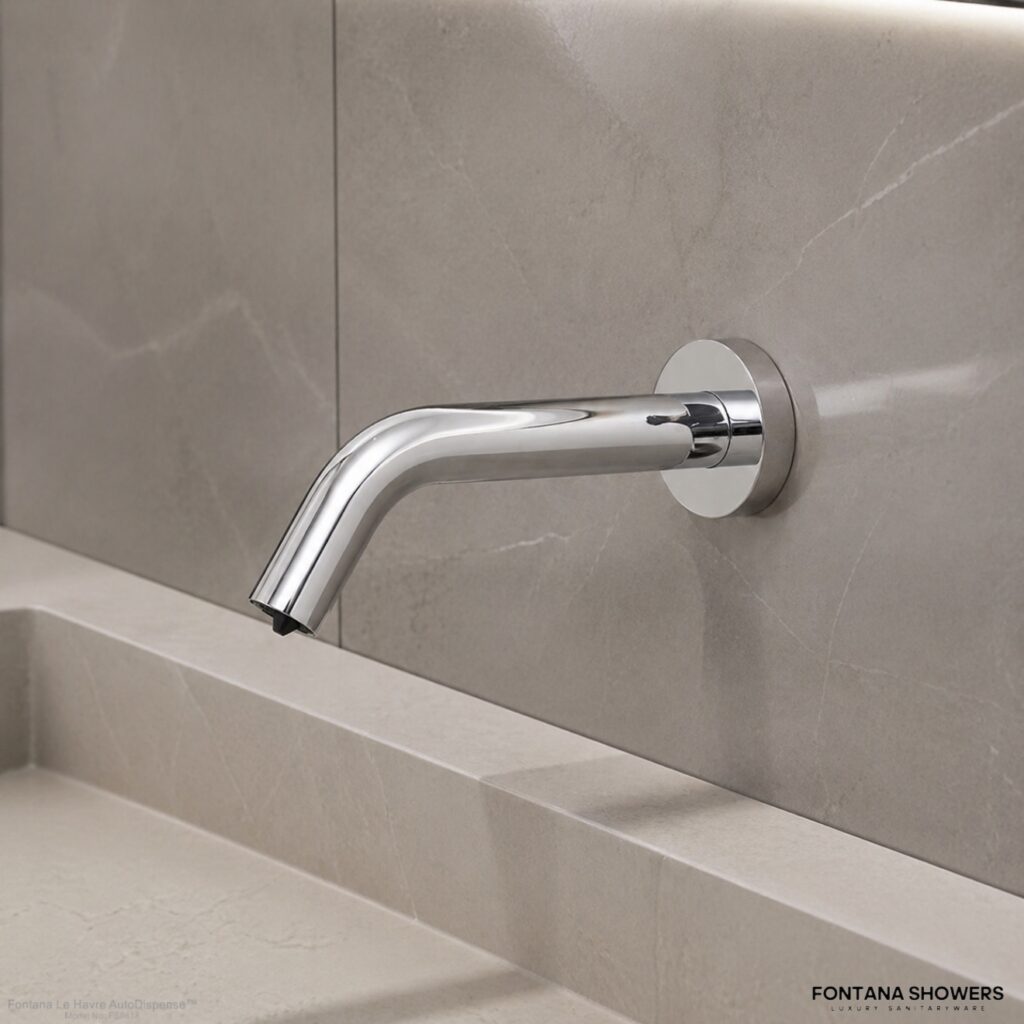
Commercial Lifecycle Engineering
Lifecycle Engineering of Fontana Automatic Soap Dispensers® in Commercial Buildings
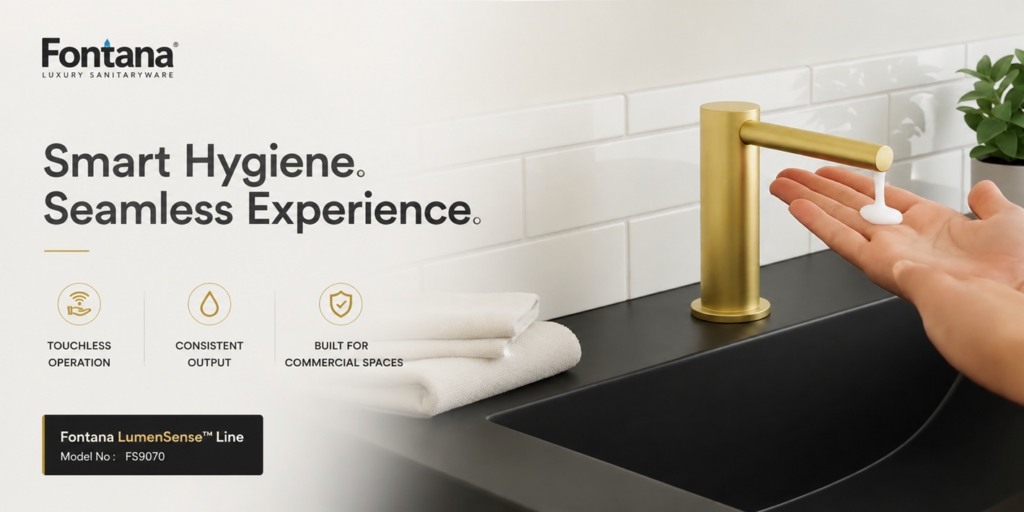
Commercial automatic soap dispensers should be evaluated as long-term building assets rather than individual restroom accessories. Fontana Automatic Soap Dispensers® are designed to support reliability, maintainability, predictable servicing, and consistent hygiene throughout years of continuous commercial operation.
Why Lifecycle Engineering Matters
For commercial buildings, the true cost of a soap dispenser extends far beyond its purchase price. Maintenance labor, soap consumption, downtime, replacement parts, user satisfaction, and service interruptions all contribute to total lifecycle cost. A dispenser that requires frequent repairs may become significantly more expensive over time than a higher-quality unit with dependable long-term performance.
Fontana Automatic Soap Dispensers® are commonly specified alongside the
Fontana Touchless Series,
Touchless Faucet Collections,
Commercial Bathroom Fixtures Catalog,
and the
Architect Series
to create coordinated restroom systems with consistent maintenance procedures.
Reliability
Stable sensor activation and dependable pump operation reduce unexpected service calls.
Maintainability
Accessible components simplify inspections, repairs, and routine servicing.
Standardization
Using common fixture families helps simplify spare-parts inventory across facilities.
Asset Value
Long-term operational consistency contributes to lower lifecycle ownership costs.
Engineering Factors Affecting Service Life
Service life depends on far more than daily activation counts. Pump design, electronic control quality, sensor stability, refill practices, soap formulation, environmental conditions, cleaning procedures, and maintenance frequency all influence long-term performance.
Commercial facilities should also establish preventive inspection schedules instead of waiting for equipment failure. Cleaning sensor windows, inspecting tubing, verifying reservoir condition, checking dispensing consistency, and replacing worn components during planned maintenance can significantly reduce unexpected downtime.
Specification teams frequently reference the
Fontana Product List,
Bathroom Fixtures Catalog,
Complete Product Index,
and the
Premium Architectural Series
when standardizing restroom products across multiple buildings.
Typical Lifecycle Evaluation Criteria
| Evaluation Category | Lifecycle Consideration |
|---|---|
| Sensor Performance | Stable activation throughout years of commercial use. |
| Pump Reliability | Consistent dispensing during repeated duty cycles. |
| Service Accessibility | Ease of inspection and replacement of wear components. |
| Soap Compatibility | Appropriate formulations help reduce pump stress. |
| Lifecycle Cost | Evaluation of purchase, maintenance, repairs, and operating costs. |
Preventive Maintenance Strategy
A preventive maintenance program helps maintain consistent soap dispensing while extending equipment service life. Rather than waiting for pumps or sensors to fail unexpectedly, facility managers can schedule inspections according to restroom traffic levels and historical maintenance records.
High-traffic airport terminals may require inspection frequencies very different from executive office buildings or hospitality facilities. Matching maintenance schedules to actual usage helps reduce unnecessary labor while improving equipment availability.
Advanced Engineering FAQ
Why should automatic soap dispensers be evaluated using lifecycle cost instead of purchase price?
Lifecycle cost includes maintenance, repairs, downtime, replacement parts, soap consumption, and service labor. Related Fontana commercial systems are available through the
Fontana Product Directory.
Facility asset management guidance can also be found through
IFMA.
What components typically receive the most maintenance?
Sensors, dispensing nozzles, tubing, reservoirs, and pump assemblies generally receive the highest maintenance attention. Related products can be reviewed through the
Commercial Product Collections.
Engineering maintenance resources are also available from
FacilitiesNet.
How can facility managers reduce unexpected dispenser failures?
Scheduled preventive inspections, compatible soap formulations, routine cleaning, and standardized replacement procedures help improve long-term reliability. Additional Fontana resources are available through the
Commercial Fixture Collections.
Maintenance best practices may also be referenced through
BOMA International.
Does soap formulation influence equipment longevity?
Yes. Extremely thick, abrasive, or incompatible soap formulations may increase wear or reduce dispensing consistency. Related Fontana specification resources are available in the
Bathroom Fixtures Catalog.
Certification information can also be reviewed through
NSF International.
Why do many architects standardize soap dispenser models throughout a building?
Standardization simplifies maintenance, spare-part inventory, staff training, and future expansion. Additional architectural product families can be explored through the
Architectural Collections.
Specification professionals frequently reference
ARCAT
during project development.
Explore Fontana Touchless Systems™ – Palermo Collection
Engineered for Architects, Engineers, Contractors, Facility Managers, and High-Traffic Commercial Facilities.