

Can Any Liquid or Foam Soap Be Used in an Automatic Dispenser?
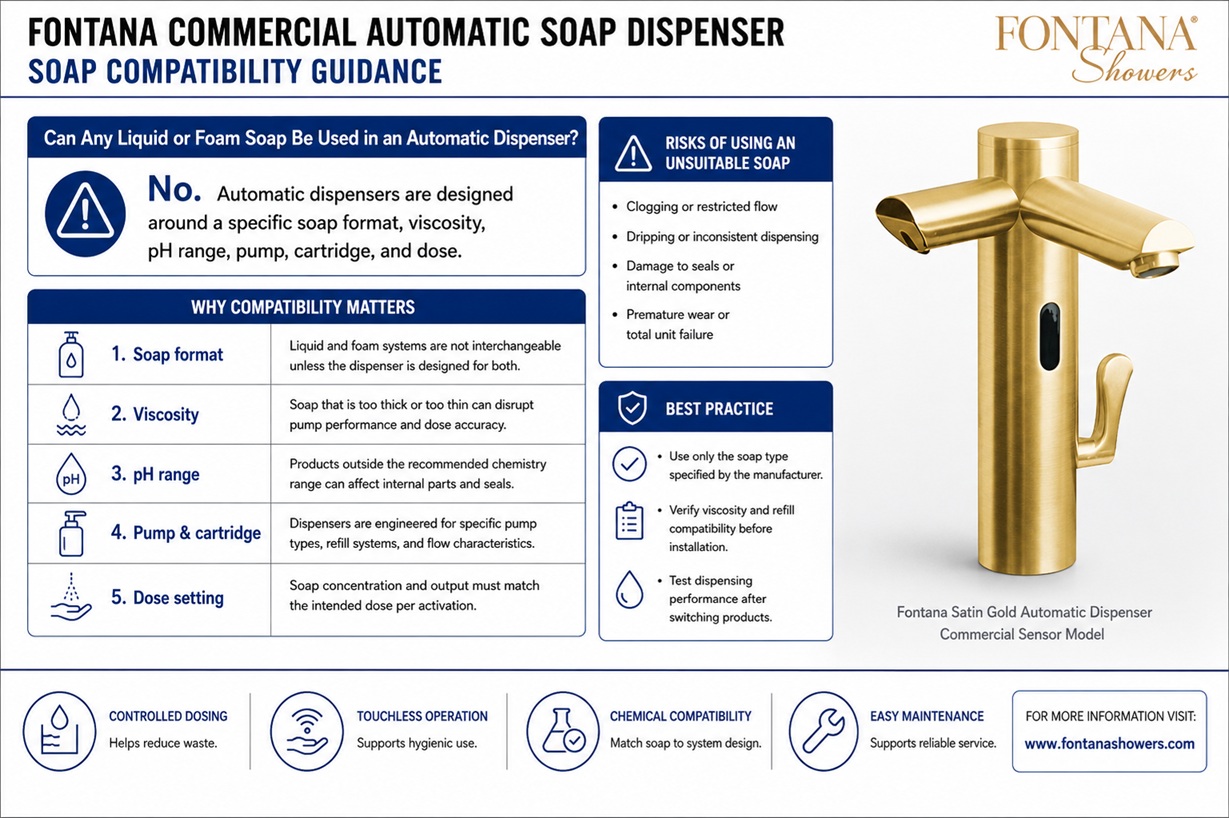
No. Automatic dispensers are designed around a specific soap format, viscosity, pH range, pump, cartridge, and dose. An unsuitable product may clog, drip, damage seals, or stop the unit.
Liquid and Foam Are Not Interchangeable
Liquid dispensers pump a viscous product directly. Foam units mix a low-viscosity formulation with air. Ordinary liquid soap can overload a foam pump, while foam solution in a liquid unit may run or drip.
Closed Cartridges
Use the exact refill family listed by the manufacturer. The cartridge may include a calibrated valve, pump, connector, or sanitary seal. A similar-looking refill is not proof of compatibility.
Bulk-Fill Systems
Bulk fill offers flexibility, but the soap must still match the required format, viscosity, pH, concentration, and chemistry.
Convertible Systems
Some models change formats only after installing a specified pump, nozzle, or conversion kit.


What Must Be Verified?
| Question | Required action |
|---|---|
| Liquid or foam? | Use the matching formulation and pump. |
| Closed cartridge? | Use the listed refill family. |
| Bulk fill? | Confirm viscosity, pH, chemistry, and concentration. |
| Concentrated soap? | Dilute only when officially permitted and measured. |
| Antimicrobial product? | Confirm active-ingredient and material approval. |
| Hand sanitizer? | Use only a sanitizer-rated dispenser. |
| Changing brands? | Empty, clean, flush, and reprime as directed. |
Viscosity, pH, and Chemistry
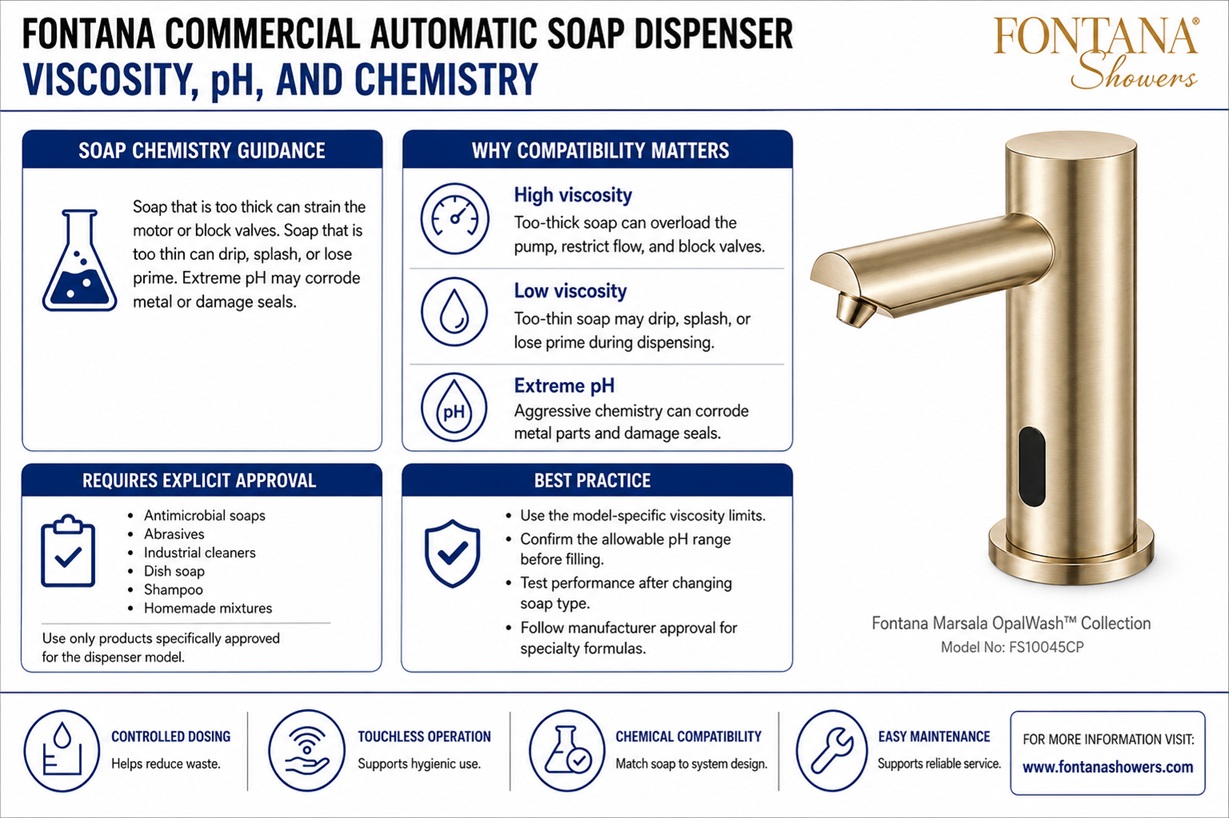
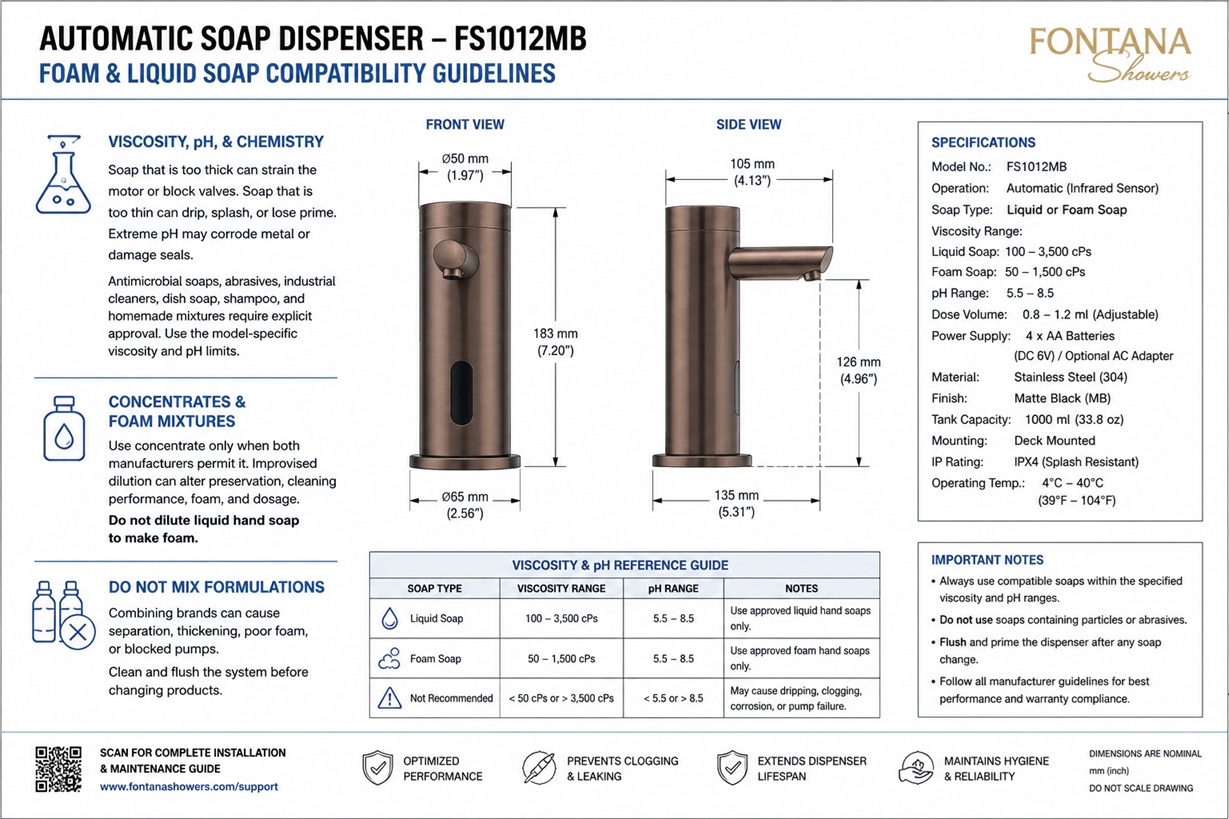
Soap that is too thick can strain the motor or block valves. Soap that is too thin can drip, splash, or lose prime. Extreme pH may corrode metal or damage seals.
Antimicrobial soaps, abrasives, industrial cleaners, dish soap, shampoo, and homemade mixtures require explicit approval. Use the model-specific viscosity and pH limits.
Concentrates and Foam Mixtures
Use concentrate only when both manufacturers permit it. Improvised dilution can alter preservation, cleaning performance, foam, and dosage. Do not dilute liquid hand soap to make foam.
Do Not Mix Formulations
Combining brands can cause separation, thickening, poor foam, or blocked pumps. Clean and flush the system before changing products.
Recommended Project Procedure
- Record the manufacturer and exact model.
- Confirm liquid, foam, gel, or sanitizer service.
- Identify cartridge, bulk-fill, or convertible operation.
- Review approved viscosity, pH, chemistry, and dilution.
- Obtain written compatibility confirmation.
- Test the soap in a limited group before full deployment.
Specification Language
Provide automatic dispensers designed for the specified liquid- or foam-soap format. Soap shall comply with the manufacturer’s documented viscosity, pH, chemistry, concentration, and refill requirements. Use listed cartridges in closed systems. Do not substitute liquid for foam, mix formulations, use unapproved concentrate, or introduce sanitizer unless the dispenser is expressly rated for that service.



Frequently Asked Questions
Can store-bought liquid hand soap be used?
Only in a compatible bulk-fill liquid unit when viscosity, pH, and chemistry meet the stated limits.
Can liquid soap be used in a foam dispenser?
Generally no. Foam systems require a compatible formulation and foaming pump.
Can hand sanitizer be used?
Only when the dispenser is specifically listed for sanitizer service.
What does universal bulk soap mean?
It means the system is not locked to one cartridge brand; technical limits still apply.
Do not treat an automatic dispenser as a universal container. Use the listed refill in a closed system, approved liquid or foam in the matching bulk unit, and specified parts in a convertible model. Correct compatibility protects the pump, dosage, and reliability.