
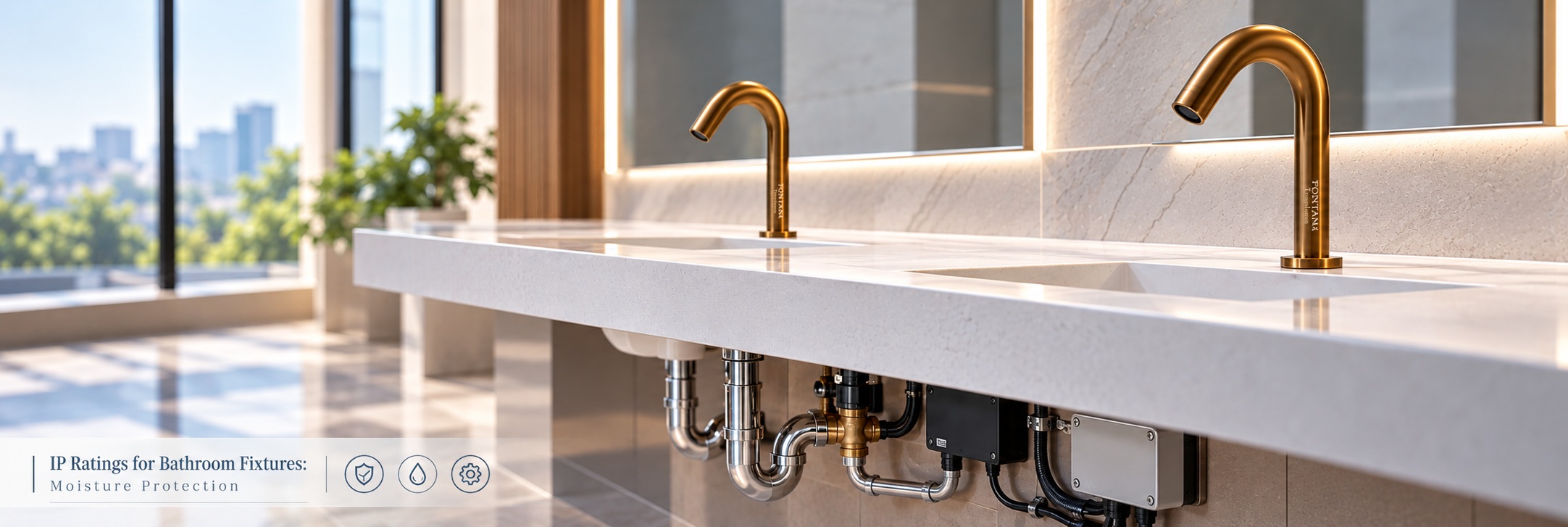
IP Ratings for Bathroom Fixtures: Moisture Protection
Electronic faucets, automatic soap dispensers and intelligent restroom controls operate close to water every day. Understanding their ingress protection (IP) ratings helps architects, MEP engineers and facility managers specify the right enclosure protection for moisture-prone environments—without mistaking splash resistance for waterproofing.
Explore Commercial Sensor FaucetsView Specification ResourcesWhy Moisture Protection Matters in Modern Restrooms
Commercial bathrooms combine running water, humidity, cleaning chemicals, temperature changes and repeated daily use. As restrooms incorporate infrared (IR) sensing, Time-of-Flight (ToF) detection, electronic solenoid valves, LED lighting and automated dispensing, protecting electrical components becomes an important part of durable fixture design.
A faucet may have a water-resistant sensor window while its power supply or undercounter control module has a different exposure limit. The correct question is not simply whether a fixture is “waterproof,” but which individual electrical components are rated for the actual installation conditions.
For hotels, airports, malls and stadiums, appropriate protection can help reduce exposure-related faults, maintenance interruptions and premature component replacement.
What Is an IP Rating?
IP stands for Ingress Protection. The classification system in IEC 60529 describes the level of protection an electrical enclosure provides against access, solid foreign objects and water under defined laboratory test conditions. An IP code normally consists of two characteristic digits.
First digit: solids protection
The “6” indicates a dust-tight enclosure under the applicable test method. First-digit classifications range from 0 to 6.
Second digit: water protection
The “5” indicates protection against water jets under the applicable test method. Common water classifications include 4 for splashing and 7 for temporary immersion.
IP44 vs. IP54 vs. IP65 vs. IP67: What Changes?
These codes describe different enclosure capabilities. They are not interchangeable purchasing labels, and a higher code is not a universal guarantee of suitability for every bathroom location.
| IP rating | Solid ingress protection | Water ingress protection | Typical specification consideration |
|---|---|---|---|
| IP44 | Protected against objects 1 mm and larger | Splashing water | Potentially relevant where incidental splashes are expected, subject to location and electrical rules |
| IP54 | Dust-protected, not dust-tight | Splashing water | Enclosures exposed to some airborne dust and incidental splashing |
| IP55 | Dust-protected | Water jets | Locations exposed to more direct water impingement where the tested jet conditions apply |
| IP65 | Dust-tight | Water jets | Exposed controls or sealed housings requiring jet protection, when documented |
| IP66 | Dust-tight | Powerful water jets | More demanding washdown exposure, if compatible with the equipment and installation |
| IP67 | Dust-tight | Temporary immersion to specified test conditions | Special enclosure applications involving short-term submersion risk; does not imply high-pressure jet protection |
IEC 60529 defines test conditions for each classification. The table summarizes enclosure protection, not mandatory IP minimums for a particular building or fixture.
Read More: Why IP67 Is Not Automatically Better Than IP65 for Cleaning
Immersion testing and water-jet testing address different hazards. IP67 alone does not demonstrate compliance with the IPX5 or IPX6 water-jet tests. If equipment must withstand both jetting and immersion, look for documentation showing both relevant classifications, such as a dual marking where applicable. Steam cleaning, high-pressure washing, cleaning chemicals and long-term condensation can also exceed the conditions represented by a published IP rating.
Which Electronic Fixture Components Need Protection?
Touchless faucet sensors
Sensor windows and electronic assemblies near the basin are exposed to splashes, wet hands and cleaning. Examine the manufacturer’s rating for the sensor housing, and check how the unit is sealed at its mounting interface.
Solenoid valves and control modules
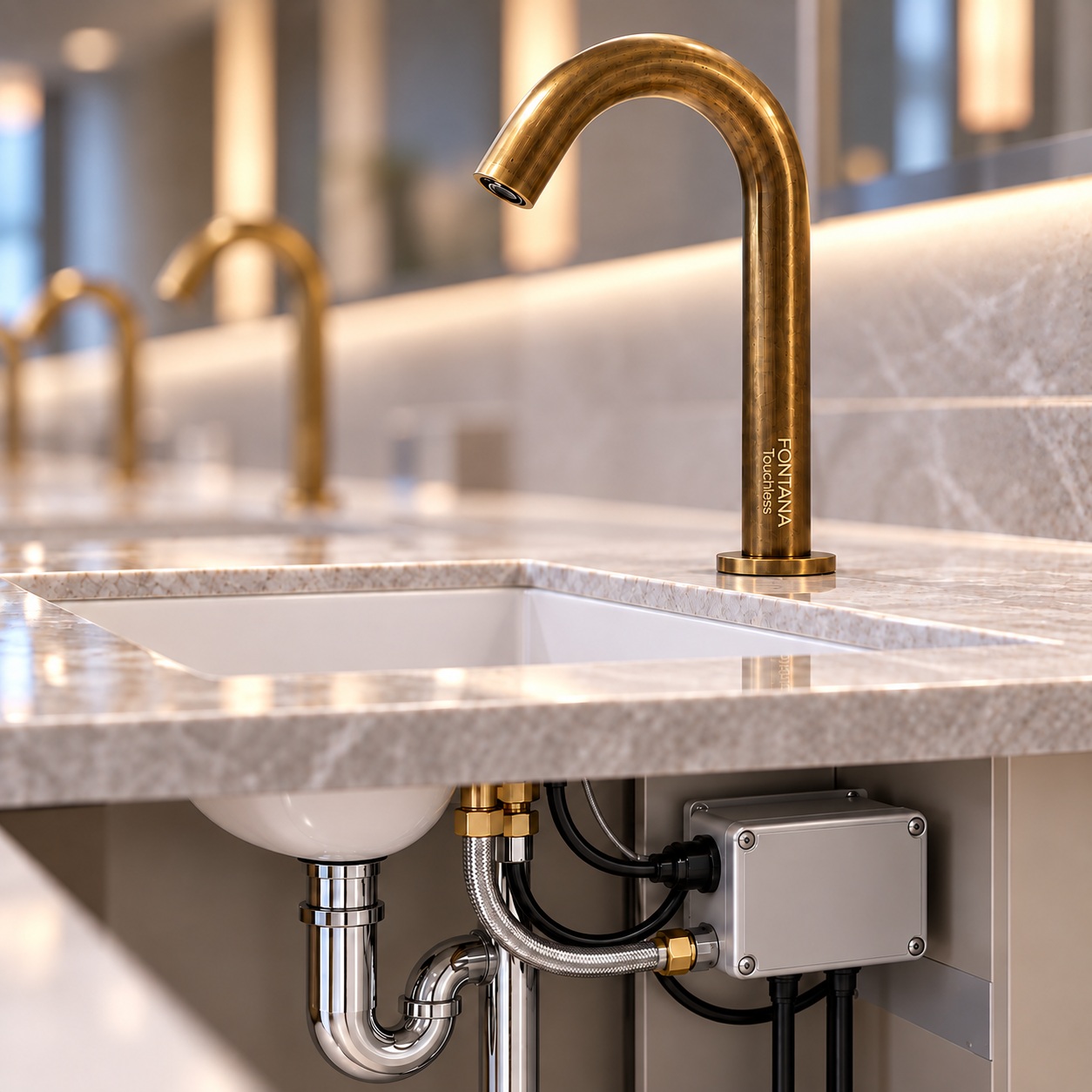
Undercounter electronics may be vulnerable to leaking supply connections, condensation, mop water or splashing from maintenance activities. Mount control boxes in approved orientations, away from likely leak paths, and maintain access for service.
Power supplies and cable connectors
Battery packs, AC adapters, cable junctions and low-voltage connectors may have different ingress ratings than the faucet itself. Unrated or poorly protected electrical connections can undermine an otherwise well-designed installation.
Read More: Soap Dispensers, Mirrors and Smart Shower Controls
Automatic soap dispensers
Soap reservoirs and electronic pumps introduce liquid exposure and service-access considerations. Inspect the dispenser body, pump housing, refill zone and electrical connections separately; resistance to soap chemistry is not established by an IP rating.
LED mirrors and digital controls
Backlit mirrors, demisters and touch controls require enclosure protection appropriate to their actual bathroom location and the governing electrical installation rules. Check driver location and listing, not only the mirror’s front-face rating.
Digital and thermostatic shower assemblies
Wet-zone interfaces, remote control modules and power equipment are exposed to different hazards. Shower-area positioning, circuit protection and approved installation instructions are essential; the IP code alone is insufficient.
Commercial Applications: Matching Protection to Exposure
Hotels & Luxury Hospitality
Guest bathrooms may combine electronic faucets, illuminated mirrors and sophisticated shower controls. Focus on steam, condensation, splash zones, discreet service access and cleaning procedures while coordinating finishes and design intent.
Malls & Retail Centers
High-traffic handwashing areas face frequent splash exposure and repeated cleaning. Evaluate sensor enclosure sealing, accessible control-box placement, cleaning compatibility and replacement-part availability across multiple lavatories.
Stadiums & Event Venues
Peak occupancy can lead to sustained wet conditions and intensive restroom cleaning. Robust enclosure selection, protected power connections and repeatable installation details improve facility-maintenance planning.
Airports & Transit Hubs
Long operating hours make fixture uptime especially important. Coordinate power strategy, sensor position, enclosure exposure and service procedures early in design.
Healthcare & Clinics
Cleaning protocols and handwashing practices require careful review of manufacturer-approved chemicals and equipment construction. IP ratings do not demonstrate antimicrobial performance or infection-prevention outcomes.
Corporate Offices & Education
Standardized fixture families can simplify preventive maintenance, spares and consistent installation. Specify the necessary enclosure ratings according to sink layouts and cleaning exposure rather than by building type alone.

Installation and MEP Coordination Checklist
Moisture protection is a system-level coordination task. The fixture’s installation drawing should show where electricity, water, soap lines and future maintenance activities intersect.
Before Installation
- Obtain model-specific IP information and installation instructions for each electrical component.
- Identify wet, splash, damp and potentially flooded locations based on actual site conditions.
- Confirm the required electrical listing, local code compliance, circuit protection and any applicable bathroom zoning rules.
- Separate electrical enclosures from expected drips, hose connections and potential cleaning runoff.
- Allow practical access to filters, solenoid valves, battery packs and control equipment.
During Commissioning
- Inspect enclosure lids, fasteners, seals, gaskets, cable glands and connector seating.
- Confirm the approved mounting orientation and avoid unapproved field drilling.
- Check for supply leaks before energizing equipment.
- Test sensor detection and shutoff behavior under normal operating conditions.
- Provide approved cleaning instructions and spare-part details to facility teams.
Read More: Common Errors That Compromise Moisture Protection
Unsealed cable entries: A cable gland or connector that does not match the enclosure specification may defeat the tested configuration.
Incorrect mounting orientation: An enclosure intended to drain or shed water in one position may trap moisture if installed differently.
Water pooling below sinks: Undercounter control boxes should not be positioned where accidental leaks or routine floor cleaning could submerge them.
Damaged seals: Repeated opening for battery changes or maintenance can affect gasket condition and therefore the enclosure’s field performance.
Assuming chemical resistance: IP water tests do not establish resistance to bleach, acids, solvents, descalers or aggressive disinfectants.
How to Specify Fontana Electronic Restroom Systems
Start with the intended application, then select a FontanaShowers commercial touchless faucet configuration suited to the basin, expected traffic and project aesthetic. Consider matching touchless faucet and automatic soap dispenser systems where a coordinated wash station supports the layout.
For technical review, request documentation that identifies which assemblies have tested IP ratings, the test classification and limitations, approved power arrangement, service clearances, and any separate requirements for undercounter or in-wall components.
The FontanaShowers BIM and specification resources can support fixture coordination alongside project-specific electrical and plumbing documents.
Browse Touchless Faucet Categories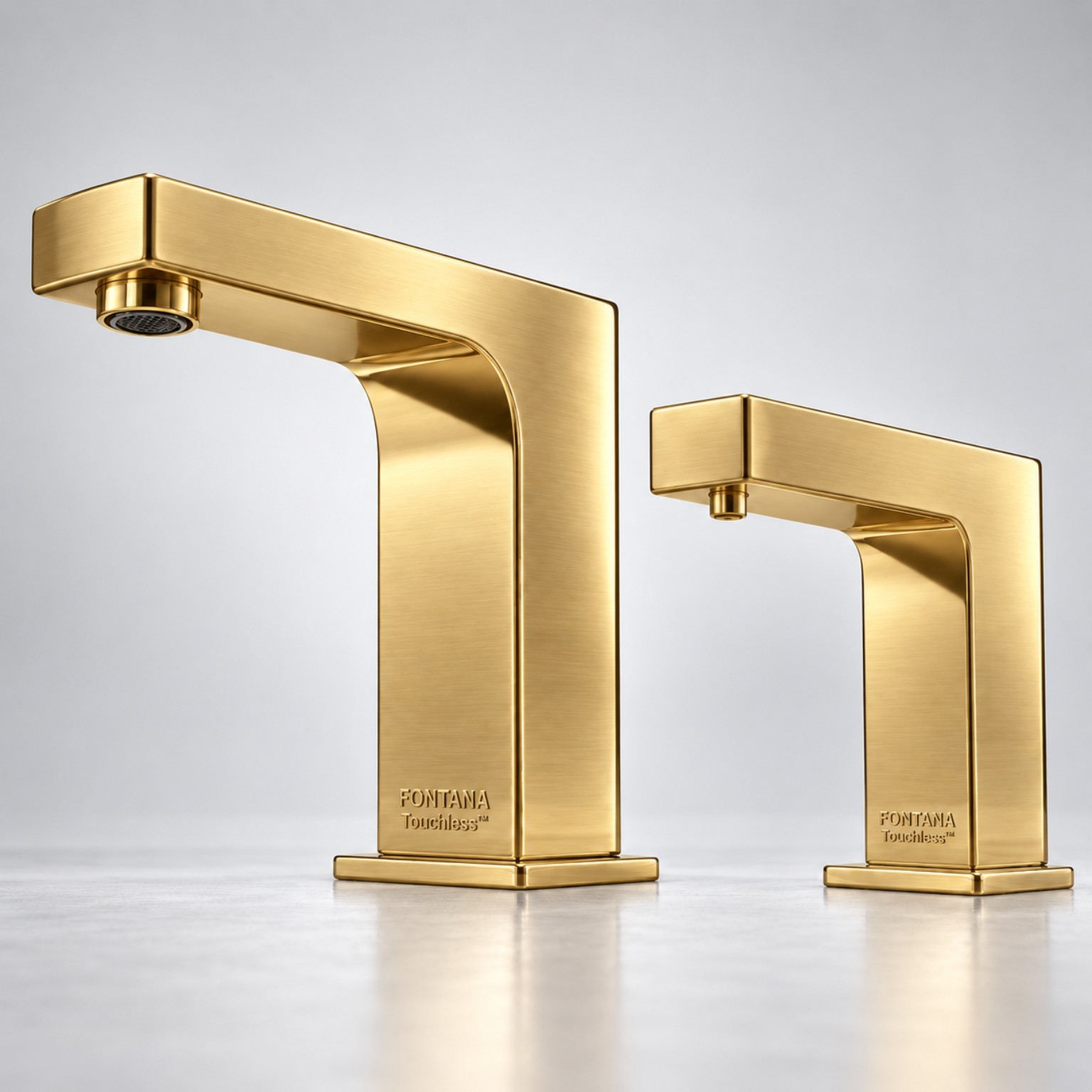
Frequently Asked Questions About Bathroom Fixture IP Ratings
What IP rating is best for a bathroom sensor faucet?
There is no single universally “best” IP rating for every sensor faucet. The necessary protection depends on how much water reaches the sensor, its power and control equipment, and the conditions of use and cleaning. Review the exact manufacturer documentation and applicable electrical installation codes.
Is IP44 waterproof?
No. IP44 indicates protection against splashing water under prescribed test conditions, not immersion, powerful jets or continuous water exposure. “Waterproof” is too imprecise to replace an actual IP classification.
Does IP65 mean a faucet can be pressure-washed?
No. IP65 denotes dust-tight protection and resistance to water jets under defined test conditions. It does not automatically authorize high-pressure cleaning, steam cleaning or exposure to chemical cleaning agents.
Are IP ratings required for electronic soap dispensers?
Requirements depend on the product, electrical design, installed location and applicable codes or project specifications. Any claimed rating should be supported by the manufacturer’s evidence for the relevant assembly.
Is IP67 always better than IP65?
No. IP67 includes a temporary-immersion water test, while IP65 includes a water-jet test. The exposure types differ; choose based on actual risks and evidence of the appropriate tests.
Can condensation damage an IP-rated control box?
It can. Temperature cycling, imperfect sealing, cable entry, moisture trapped during service and conditions outside the tested exposure may cause problems. IP classifications are not blanket condensation-performance warranties.
Reference Standards and Further Reading
Effective restroom specification combines enclosure protection with accessible design, sanitary plumbing, power safety and lifecycle service planning. Use the source standard together with model-specific installation guidance rather than relying on a general “waterproof” claim.
Specify Electronic Bathroom Fixtures with Greater Confidence
From luxury hotel bathrooms to the busiest public washrooms, reliable electronics begin with an informed approach to moisture exposure, enclosure protection and service access. Explore FontanaShowers commercial fixture collections and technical resources to coordinate the right solution for your project.
Explore Fontana Commercial FaucetsAccess Technical Resources