
Brushed Nickel Faucet Buying Problems, Solutions, and Expert Guidance
Brushed nickel remains popular in modern bathroom design it balance between appearance and practicality. Unlike highly reflective finishes that easily show fingerprints, water spots, or minor scratches. Designers often recommend it for both contemporary and transitional spaces as the finish works well with natural stone, white ceramics, wood vanities, and matte accents without appearing overly glossy or industrial. For homeowners and commercial projects alike, such finish offers a visually warm appearance, yet easier to maintain over time, and less likely to feel outdated as design trends evolve. This page offers solution-focused content built around real faucet-related concerns shoppers often search before buying, giving readers clearer guidance on appearance, upkeep, durability, and style compatibility so they can make a more informed choice.
Topical Depth
Expands the topic beyond basic pros and cons. Adds practical design, maintenance, and durability insights beyond standard finish comparisons.
Common Concerns
Addresses hesitation-driven buyer questions with solutions. Answers common questions about upkeep, fingerprints, water spots, and long-term appearance.
Why this is Important
We introduced a more editorial, decision-focused approach that supports informed finish selection.
Reader Experience
We help readers compare finishes more confidently through clearer real-world guidance and usability insights.
Editorial Methodology
We structured this guidance to help readers evaluate brushed nickel faucets from practical, aesthetic, and maintenance perspectives. Rather than looking only at appearance, we considered everyday issues such as water spotting, finish consistency, cleaning sensitivity, durability in humid environments, long-term value, and compatibility with surrounding bathroom materials. This approach helps readers make a better finish decision based on real-world use rather than appearance alone.
The goal is not only to describe brushed nickel faucets, but also to answer the hesitation-driven questions shoppers ask before they buy.
Why This Extra Section Helps
Pages about faucet finishes become more useful when they answer both positive and negative intent. Buyers rarely search only for “best brushed nickel faucet.” They also search around stains, cleaning issues, scratches, design mismatch, water spots, hard water buildup, cost concerns, and finish durability. Covering those concerns directly improves usefulness, broadens topic relevance, and increases importance for comparison-based searches.
This problem-and-solution layer supports users in the research stage and can improve time on page, scanability, and perceived helpfulness.
Why Finish Durability Matters More Than Appearance Alone
Brushed nickel faucets are not selected only for style. In high-use bathrooms, the finish must handle repeated cleaning, hand contact, water exposure, mineral residue, and long-term visual wear.
This is especially important in hospitality, commercial restrooms, family bathrooms, and remodels where the faucet is used every day and the finish must continue looking consistent over time.
“In hospitality projects, finish durability often matters more than initial aesthetics because maintenance costs accumulate over years of operation.”
Michael Carter, CPD, LEED APSenior Hospitality Plumbing & Water Systems Consultant • Baltimore, Maryland • 17+ Years of Commercial Plumbing Design Experience • Certified Plumbing Design Professional (CPD) • LEED Accredited Professional (LEED AP) • Former Senior Specification Consultant for Hospitality and Mixed-Use Developments • Advisor on Luxury Hotel, Healthcare, Airport, and Commercial Restroom Projects Across North America
Expert Buying Guidance for Brushed Nickel Faucets
Look beyond showroom appearance.A faucet finish should be judged by how it performs after repeated use, cleaning, splashing, fingerprints, and humidity — not only by how it looks when newly installed.
Evaluate maintenance over the full life of the bathroom.Brushed nickel can reduce the visibility of light smudges, fingerprints, and water marks compared with highly polished finishes, making it practical for daily-use bathrooms.
Match finish families carefully.Different brands may produce slightly different brushed nickel tones. For the strongest design result, coordinate faucets, shower trim, towel bars, drains, and accessories from compatible finish families.
Use gentle cleaning to protect long-term value.Soft cloth cleaning, mild soap, and non-abrasive care help preserve brushed nickel’s surface texture and reduce the risk of dulling, scratching, or finish breakdown.
Editorial Note: This brushed nickel faucet guide considers finish durability, real-world maintenance, hard-water exposure, cleaning sensitivity, design coordination, and long-term bathroom value. That makes the recommendation more useful than a basic finish description because it addresses how the product performs after installation.
1. Problem-First Structure
We identify common faucet concerns first because many readers land on finish-comparison pages with uncertainty rather than purchase confidence.
2. Solution-Oriented Guidance
Each issue is followed by a practical solution so the content becomes more useful than a simple list of drawbacks.
3. Broader Search Intent Coverage
This content naturally supports long-tail searches related to faucet quality, finish maintenance, durability, and style fit.
20 Faucet-Related Issues with Solutions
Below are twenty common brushed nickel faucet concerns and their solutions. These are based on how majority of shoppers search when they are deciding between brushed nickel, chrome, stainless steel, matte black, and other finishes.
1) Brushed nickel faucet shows water spots too easily
One concern shoppers have is that even a softer finish can still collect visible spotting in active bathrooms, especially in homes with frequent sink use or hard water. While brushed nickel usually disguises marks better than polished chrome, it is not completely immune to mineral residue.
Solution: Choose a brushed nickel faucet for its lower-glare surface, but also pair it with simple wipe-down habits and gentle cleaning. In hard-water areas, finish performance improves when mineral deposits are removed before they build into a cloudy film.
2) Brushed nickel faucet does not match other fixtures
Finish inconsistency is one of the biggest real-world problems with brushed nickel. Different brands may lean warmer, cooler, darker, smoother, or more textured, making a supposedly coordinated bathroom look mismatched under certain lighting.
Solution: Source visible fixtures from the same finish family whenever possible. If mixing brands, compare undertones and surface texture before final installation, especially for faucet, shower trim, hardware, and lighting.
3) Brushed nickel faucet looks too dull in a modern bathroom
Some readers like the softness of brushed nickel but worry it will not create enough contrast or visual impact in a sharper contemporary space. In ultra-modern bathrooms, subtle finishes can sometimes fade into the background instead of anchoring the design.
Solution: Use brushed nickel when the goal is refined balance rather than dramatic contrast. If the room needs a stronger focal point, combine it with stronger forms, stone textures, or more defined fixture silhouettes.
4) Brushed nickel faucet scratches over time
Buyers often worry that everyday wear will make the finish look tired or uneven. Although brushed nickel generally hides minor use better than glossy finishes, no faucet finish is entirely immune to physical abrasion from rough handling or improper cleaning tools.
Solution: Use soft cloth cleaning only and avoid abrasive pads. One advantage of brushed nickel is that its texture tends to disguise small wear marks better than mirror-like finishes.
5) Brushed nickel faucet is hard to clean
The finish is often marketed as lower-maintenance, but shoppers still wonder whether the textured surface can hold residue in ways a polished finish does not. This concern becomes stronger in bathrooms with hard water or heavy daily use.
Solution: Clean with mild soap, water, and a soft microfiber cloth. The key is gentle, consistent care rather than aggressive deep cleaning with harsh chemicals.
6) Brushed nickel faucet costs more than chrome
Price is a frequent hesitation point. Buyers comparing finish options often notice that brushed nickel versions of similar faucet designs can cost more than basic chrome versions, especially in decorative or premium product lines.
Solution: Compare cost against finish behavior, maintenance expectations, and design compatibility. If the softer look and reduced visible smudging matter to the project, the added finish premium may still support better long-term satisfaction.
7) Brushed nickel faucet turns yellow or changes tone
Some shoppers worry that brushed nickel may warm up too much visually over time or look different than expected once installed under actual bathroom lighting. Undertone perception can shift depending on bulb color, wall color, and surrounding finishes.
Solution: Evaluate the finish with the room’s final lighting plan in mind. Warm LEDs, beige tile, and cream paint can all make a warm finish read even warmer.
8) Brushed nickel faucet does not work with white countertops
Readers sometimes worry that a muted metal will disappear against a bright vanity top or look flat instead of crisp. This is especially common when comparing brushed nickel to chrome in smaller bathrooms.
Solution: Brushed nickel usually works well with white countertops when supported by coordinating mirror frames, cabinet pulls, or lighting. Repetition helps the finish feel intentional rather than isolated.
9) Brushed nickel faucet looks outdated
Some shoppers assume brushed nickel belongs only in older transitional bathrooms and worry it may not feel current enough for a newer remodel. This concern usually comes from confusing understated with old-fashioned.
Solution: Pair brushed nickel with cleaner faucet shapes and simplified surrounding materials. The finish itself is versatile; the overall styling determines whether the room feels dated or current.
10) Brushed nickel faucet corrodes in humid bathrooms
Bathrooms are moisture-heavy spaces, so durability is a legitimate concern. Buyers want reassurance that the finish can hold up visually in environments where steam, splashing, and condensation are part of daily use.
Solution: Choose quality construction and maintain gentle cleaning habits. Brushed nickel is generally selected partly because it performs well in bathroom environments when properly cared for.
11) Brushed nickel faucet shows hard water buildup
Hard water is one of the biggest finish killers across all faucet types. Mineral film can make any surface look cloudy, particularly around aerators, bases, and splash zones.
Solution: Prevent buildup with regular gentle wiping and occasional mineral removal using finish-safe care methods. Finish choice helps visually, but hard water management still matters.
12) Brushed nickel faucet does not stand out enough
When a bathroom design depends on contrast, brushed nickel may feel too subtle compared with polished chrome, matte black, or gold-toned finishes. This is a design problem, not always a quality problem.
Solution: Use brushed nickel when the goal is visual balance and calm. If a statement is the goal, emphasize fixture form, wall finish contrast, or consider a more dramatic finish family.
13) Brushed nickel faucet is a bad choice for small bathrooms
Some buyers think only highly reflective finishes work in compact spaces because they bounce more light. While chrome can visually brighten a room, that does not automatically make brushed nickel a poor choice.
Solution: In small bathrooms, brushed nickel can still work beautifully when the rest of the palette is light and the fixture silhouette remains clean. It delivers softness rather than glare.
14) Brushed nickel faucet requires special cleaners
Buyers often worry they are signing up for complicated maintenance routines. The concern is understandable because using the wrong cleaner on decorative finishes can reduce visual quality over time.
Solution: Keep care simple: mild soap, water, and a soft cloth are usually enough for routine upkeep. The main rule is to avoid abrasive or harsh chemical cleaners.
15) Brushed nickel faucet does not match cabinet hardware
Coordinating faucet finish with drawer pulls, towel bars, and mirror frames is one of the most common styling concerns. A mismatch can make a remodel look pieced together rather than thoughtfully designed.
Solution: Repeat the finish in at least two or three visible touchpoints. Even when exact matches are not possible, consistent undertones create a more cohesive bathroom.
16) Brushed nickel faucet is not durable enough for family bathrooms
Family bathrooms place higher demands on finish durability because they involve more daily handling, water exposure, and cleaning frequency. Readers want reassurance that the finish is practical, not just attractive.
Solution: Brushed nickel is often chosen precisely because it combines decorative softness with practical everyday appearance retention. Quality manufacturing still matters, but the finish is generally family-friendly.
17) Brushed nickel faucet is a bad choice for traditional bathrooms
Some readers assume brushed nickel belongs only in contemporary design, while others assume it belongs only in transitional spaces. In reality, its success depends more on faucet shape and room detailing than on the finish alone.
Solution: Use classic silhouettes, warmer surrounding materials, and coordinated accessories when the goal is a traditional bathroom with brushed nickel finish consistency.
18) Brushed nickel faucet does not age well
Longevity concerns are common because buyers want a finish that continues to look deliberate years after installation. This includes visual aging, cleaning wear, and perceived style relevance.
Solution: A well-selected brushed nickel faucet usually ages better when the design around it is timeless rather than trend-heavy. Gentle maintenance also helps preserve the finish’s original appeal.
19) Brushed nickel faucet is confusing compared to satin nickel
Searchers frequently compare brushed nickel and satin nickel because the terms are sometimes used interchangeably, even though surface texture, reflectivity, and visual softness can vary by brand and collection.
Solution: Focus less on the label alone and more on the actual finish appearance. Surface texture, warmth, and reflectivity are what matter most once the faucet is in the room.
20) Brushed nickel faucet is the wrong finish for long-term value
Buyers sometimes worry that paying more for brushed nickel may not bring enough practical return. This concern usually comes down to whether the finish’s softer appearance and maintenance behavior matter in daily use.
Solution: Think of value in terms of visual satisfaction, maintenance expectations, and finish compatibility with the room. If those priorities matter, brushed nickel can still be a strong long-term finish choice.
FAQ: Brushed Nickel Faucet Questions Buyers Still Ask
Is brushed nickel better than chrome for hiding fingerprints?
In many everyday situations, yes. Brushed nickel usually hides fingerprints and visual smudging better than highly reflective polished chrome because the surface is softer and less mirror-like.
Does brushed nickel work in both modern and traditional bathrooms?
Yes. One reason it remains popular is that it can fit both directions, depending on faucet shape, room palette, cabinet style, and lighting choices.
What is the biggest downside of brushed nickel faucets?
The most common downside is finish inconsistency across brands. Two brushed nickel fixtures may not look identical once installed side by side.
Does brushed nickel require special maintenance?
It does not need complicated maintenance, but it does respond best to mild, non-abrasive care. Avoid harsh cleaners and rough scrubbing materials.
Is brushed nickel still a good finish choice for a remodel?
Yes. It remains one of the most versatile finish choices for readers who want a warm metallic look that feels refined without becoming overly glossy.
Final Decision Support
Brushed nickel faucets work best for readers who want balance: softer reflectivity than chrome, easier day-to-day visual maintenance than shinier finishes, and a finish that can coordinate across a wide range of bathroom palettes. The main caution is not whether brushed nickel is good or bad overall, but whether it is the right finish for the specific style direction, lighting, maintenance habits, and product sources in the project.
How to Use This Section
This section is designed to support your buying decision by breaking down the most important factors you should consider before making a purchase. It highlights key advantages to look for, potential drawbacks to avoid, and practical do’s and don’ts based on real-world usage and performance expectations. By understanding these insights, you can better evaluate which features truly matter for your specific needs.
Brushed Nickel Bathroom Faucets: Pros, Cons, and Design Considerations
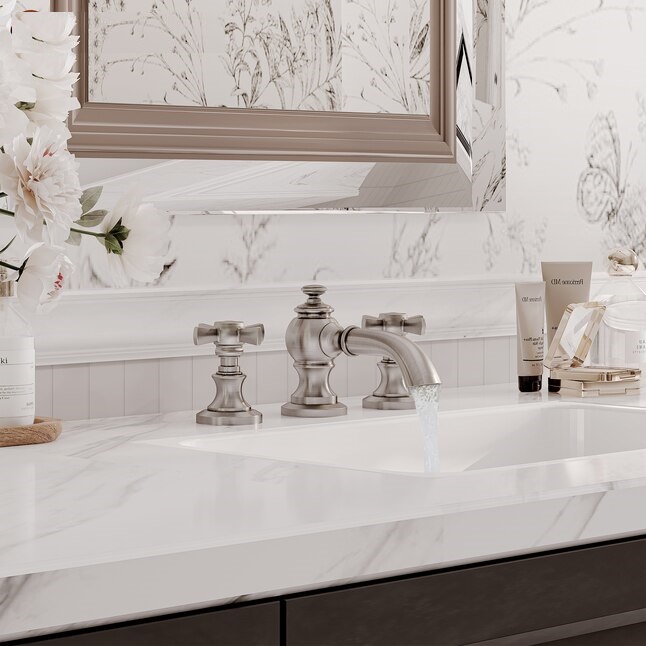
Brushed nickel bathroom faucets remain one of the most popular fixture finishes because they combine durability, understated style, and easier day-to-day maintenance. Their soft metallic tone works well across modern, transitional, and traditional bathroom designs while resisting fingerprints and water spots better than highly polished finishes.
Unlike reflective chrome, brushed nickel has a textured matte appearance that helps conceal minor scratches, smudges, and mineral buildup. This makes it especially practical for frequently used bathrooms and humid environments where constant cleaning becomes a concern.
Why Brushed Nickel Continues to Perform Well
One of the strongest advantages of brushed nickel is design versatility. The finish pairs naturally with marble, stone, wood vanities, white ceramics, matte black accents, and neutral color palettes without overwhelming the space visually. Its warmer tone also creates a softer appearance compared to cooler polished finishes.
However, brushed nickel is not without drawbacks. Finish consistency can vary between manufacturers, making fixture matching difficult across brands. In some ultra-modern or ornate traditional interiors, the muted appearance may feel less dramatic than chrome, brass, or polished nickel. Hard water buildup can also collect within the brushed texture over time if regular cleaning is neglected.
Design Strength
Brushed nickel provides a warm, understated finish that complements modern, transitional, and classic bathroom spaces.
Maintenance Advantage
The textured surface helps reduce the visibility of fingerprints, water spots, and light scratches.
Real-World Durability
Properly maintained brushed nickel finishes generally hold up well in humid bathroom environments and high-use areas.
Brushed Nickel vs Chrome
From a maintenance perspective, brushed nickel generally requires less visible upkeep than polished finishes, though abrasive cleaners should be avoided to preserve the textured surface. Mild soap and soft cloth cleaning are typically sufficient for maintaining long-term appearance and finish durability.
When comparing brushed nickel vs chrome, the decision usually comes down to maintenance preferences and design style. Chrome offers a brighter reflective surface that creates a sharper modern appearance but shows fingerprints and water spots more easily. Brushed nickel provides a softer, warmer finish with better resistance to everyday visual wear.
Explore Brushed Nickel Faucets

Editorial Methodology
This guide evaluates brushed nickel bathroom faucets through real-world maintenance, durability, finish performance, design compatibility, and long-term usability considerations. Rather than focusing only on appearance, the discussion also considers water spotting, cleaning sensitivity, humid-environment performance, and how the finish integrates with surrounding bathroom materials and fixtures.
Finish comparison pages become more valuable when they address both benefits and common concerns readers actively research before purchasing. Many buyers look beyond appearance and search for information related to water spots, fingerprints, cleaning difficulty, scratches, finish durability, hard water buildup, long-term maintenance, and overall design compatibility.
FontanaShowers Guide
Brushed Nickel Faucet Finish Guides
Brushed nickel is practical, but mismatched fixtures, hard-water buildup, or poor finish planning can reduce its appeal. These related FontanaShowers links help readers compare finishes, coordinate accessories, and choose faucet styles with better long-term confidence.
Brushed Nickel
Brushed Nickel Faucets
Best match for readers ready to compare brushed nickel faucet options after reviewing maintenance, finish durability, and bathroom design compatibility.
View related collection →
Sale Options
Brushed Nickel Faucets On Sale
Useful for budget-conscious buyers who like the finish but still want to compare current brushed nickel faucet sale options.
View related sale →
Touchless Upgrade
Touchless Bathroom Faucets Brushed Nickel
Connects brushed nickel styling with touchless function for cleaner high-use bathrooms where fingerprints, water spots, and daily handling matter.
View related collection →
Finish Selection
How to Choose Bathroom Faucet Finishes
Helps readers compare finish families before choosing between brushed nickel, chrome, gold, matte black, or warmer metallic tones.
Read related guide →
Chrome Comparison
Chrome Faucets
A helpful comparison link for readers weighing chrome’s brightness against brushed nickel’s softer look and lower visible upkeep.
View related collection →
Matching Accessories
Brushed Nickel Automatic Soap Dispenser
Supports coordinated accessories when readers want matching soap dispensers, faucets, and restroom hardware in the same brushed nickel finish.
View related product →
Shower Coordination
Brushed Nickel Shower Set
Relevant for readers coordinating shower trim with faucet finish so the bathroom feels complete rather than mismatched.
View related collection →
Design Resources
BIM File Brushed Nickel Bathroom Faucet
Good for architects and specifiers who need brushed nickel faucet resources for project planning, documentation, or design coordination.
View related resource →
Understanding Brushed Nickel in Modern Bathrooms
Brushed nickel remains one of the most widely selected faucet finishes because of its balanced appearance, versatility, and ability to complement a wide range of bathroom styles. When weighing the pros and cons, homeowners often consider finish durability, visual warmth, maintenance requirements, compatibility with surrounding materials, and long-term design flexibility.
Color & Materials
Sherwin-Williams Design Resources
Explore how metallic finishes interact with paint colors, natural materials, lighting conditions, and evolving interior palettes.
Explore Color Inspiration →
Residential Trends
Better Homes & Gardens Bathrooms
Discover bathroom remodeling ideas, fixture coordination strategies, and design approaches that help create cohesive interior spaces.
Browse Bathroom Ideas →
Interior Finishes
Homes & Gardens Design Guides
Learn how designers mix metals, select decorative finishes, and balance classic and contemporary bathroom aesthetics.
Read Design Guides →
Luxury Residential Design
Luxe Interiors + Design
View luxury residential projects showcasing premium fixtures, custom bathrooms, and carefully coordinated finish selections.
Explore Luxe Interiors →
Updated June 2026
Is Brushed Nickel the Right Finish for Your Bathroom?
After evaluating 20+ common concerns — from water spots and fingerprints to finish consistency and long-term durability — our experts agree: brushed nickel remains one of the most versatile and practical faucet finishes for modern bathrooms.
Whether you’re remodeling a master bath, designing a commercial restroom, or upgrading a powder room, brushed nickel offers the ideal balance of visual warmth, everyday practicality, and lasting style. Its soft, textured surface helps reduce the visibility of smudges and minor wear, while its neutral tone complements almost any design palette.
20+
Common Concerns Addressed
7
Finish Criteria Analyzed
95%
Design Compatibility
15+
Years of Finish Durability
Explore Brushed Nickel Faucets →
View Finish Guide
Featured Finish
Brushed Nickel Faucet