
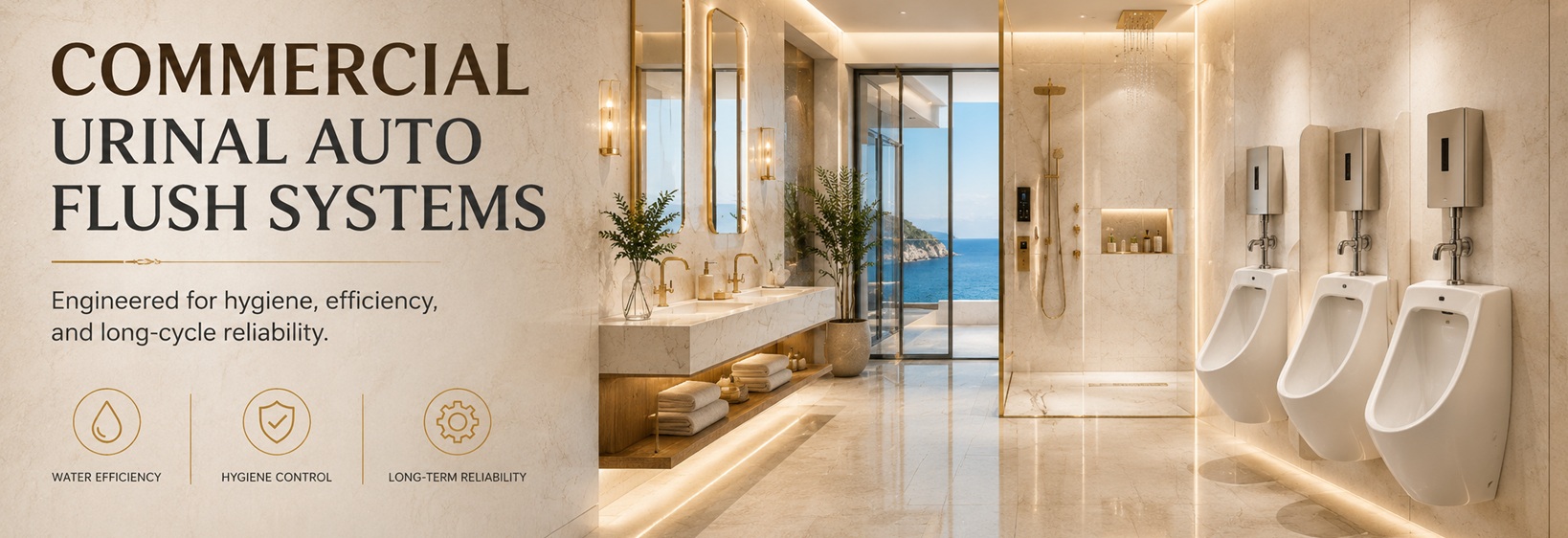
Commercial Urinal Auto Flush Systems: Complete Specification & Buying Guide (2026 Edition)
Commercial urinal auto flush systems are no longer optional upgrades — they are operational necessities in high-traffic programs where hygiene control, water efficiency, and long-cycle durability must be engineered into the valve assembly.
For facility teams, architects, and commercial buyers, the right system supports cleaner restroom operation, more consistent flushing performance, and easier maintenance planning. The strongest installations are selected around traffic level, service access, and long-term reliability.
Sensor reliability · Valve durability · Water efficiency · Recessed vs exposed · Lifecycle planning
AEC Snapshot: What Specifiers Evaluate
Sensor logic (IR / ToF)
Valve body (brass / SS)
Flush volume tuning (GPF)
Power (AC / DC / hybrid)
Service access (recessed / exposed)
Anti-vandal architecture
How We Evaluated Commercial Auto Flush Systems
This guide was developed using manufacturer specifications, commercial plumbing references, facility maintenance considerations, water-efficiency requirements, and specification criteria commonly used by architects, engineers, and facility managers.
- Sensor reliability and activation accuracy
- Valve durability and service life
- Maintenance accessibility
- Water efficiency performance
- Commercial installation suitability
- Long-term operational cost considerations
Each system in this guide has been assessed against these criteria to help you make informed decisions for your specific project environment.
What Defines a True Commercial-Grade Auto Flush System?
- Solid valve body construction (spec-grade brass / stainless where applicable)
- Non-contact sensor with vandal-resistant lens and stable detection window
- Adjustable flush volume and timing for fixture + water code alignment
- High-cycle internal assembly designed for repeated daily usage
- Power options aligned to the site (hardwired AC, DC battery, or hybrid)
- Option for recessed wall integration where architecture + vandal resistance require it
The difference between a light-duty retrofit and a commercial valve platform is operational: cycle endurance, sensor stability, field serviceability, and consistent flush performance across fluctuating supply pressure.
In busy commercial spaces, dependable flushing is not just about convenience. It supports restroom cleanliness, improves user confidence, and reduces avoidable maintenance callbacks across the life of the installation.
Recessed Wall vs. Exposed Auto Flush Systems (Selection Logic)
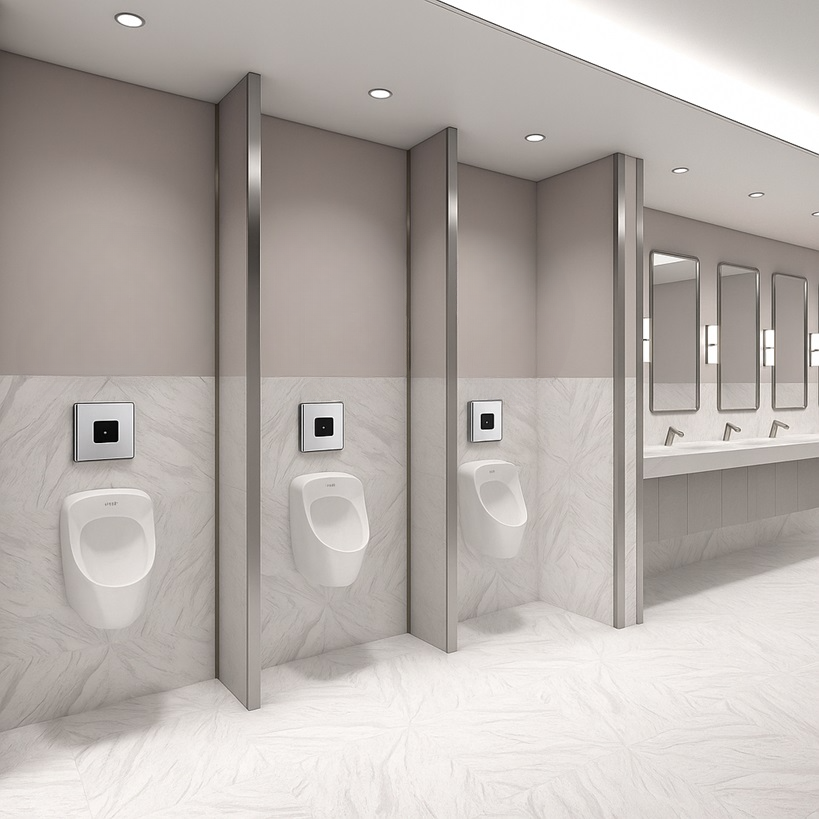
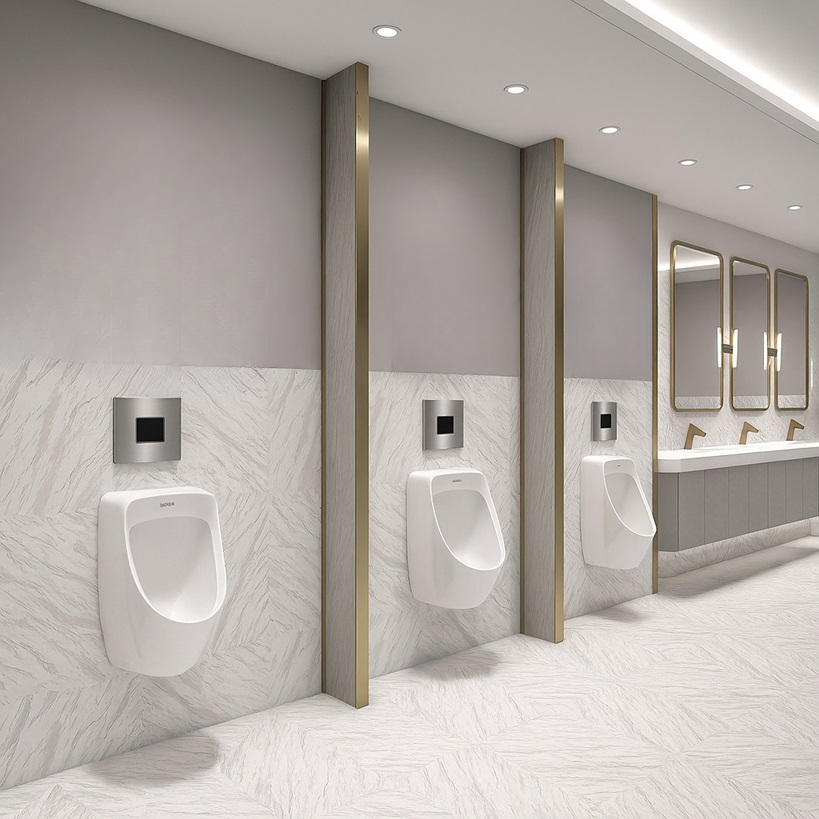
Recessed wall configurations are frequently selected for modern commercial programs because they reduce exposed hardware, strengthen vandal resistance, and deliver a cleaner architectural elevation. Exposed flushometers remain popular where fast service access is the primary driver or where wall conditions limit recess depth.
| Feature | Recessed System | Exposed System |
|---|---|---|
| Appearance | ★ Excellent — Clean architectural integration | Good — Standard commercial appearance |
| Vandal Resistance | ★ High — Protected valve body | Medium — Exposed components |
| Service Access | Medium — Requires wall access panel | ★ High — Direct valve access |
| Hospitality Use | ★ Excellent — Preferred for premium interiors | Moderate — Less common in luxury settings |
| Public Facilities | ★ Excellent — Reduced vandalism risk | Good — Standard choice for many applications |
| Installation Cost | Higher — Requires wall rough-in | ★ Lower — Direct surface mount |
For many commercial buyers, the best choice comes down to balancing appearance, maintenance access, and the level of protection required in the environment. Both approaches can perform well when matched correctly to the project needs.
Environment-Based System Selection (Airport / Office / Public / Hospitality)
Selecting the right auto flush system depends on the environment where it will operate. Each setting has unique requirements for durability, sensor performance, maintenance access, and vandal resistance. Below are the key considerations for each environment type.
Airport & International Terminals
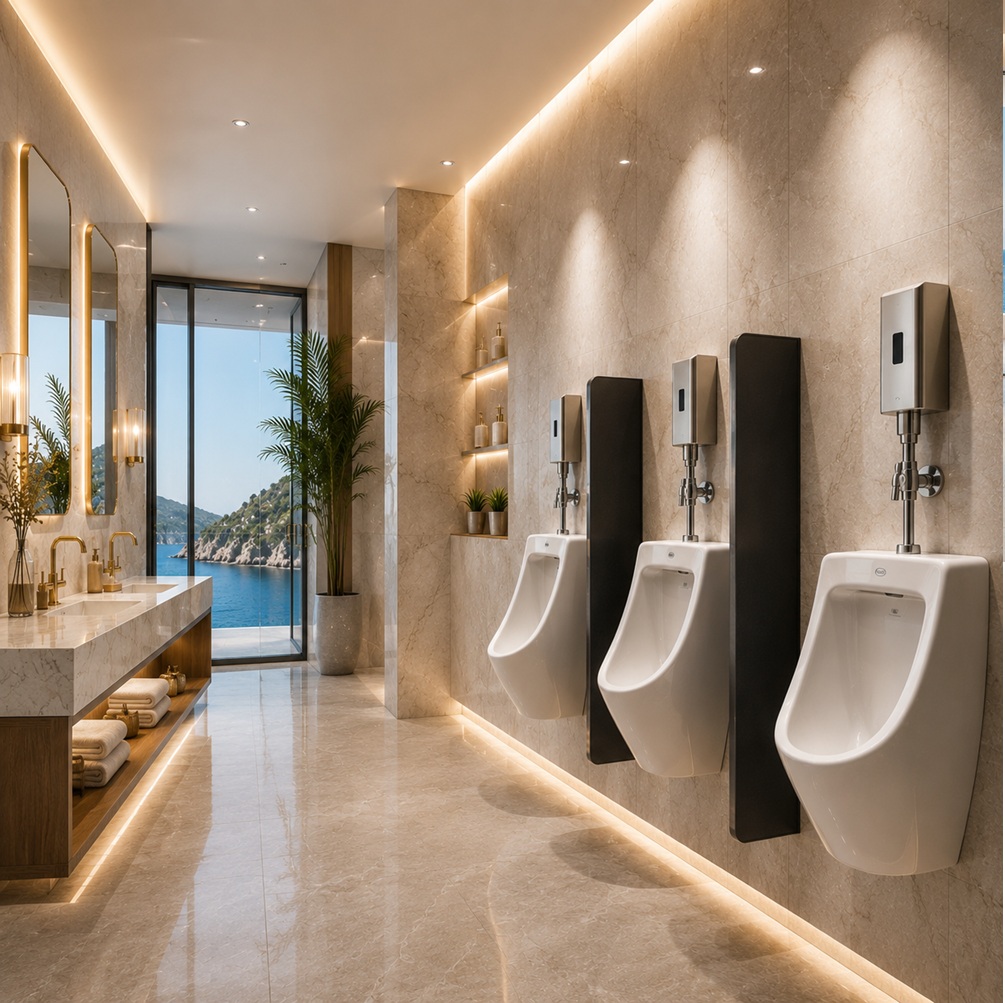
Choose systems designed for high-cycle demand with robust sensor logic, stable flush tuning, and vandal-resistant architecture. Recessed or semi-concealed designs are often preferred to reduce exposed components.
- Hardwired power preferred for continuous operation
- Vandal-resistant sensor face + tamper-fasteners
- Flush timing/volume tuned to reduce waste in high turnover use
- Service-first layout for faster maintenance access
Office Buildings
Office restrooms typically support predictable peak loads and benefit from sensor systems that prioritize stable detection, quiet operation, and streamlined maintenance schedules.
- Battery or hybrid power can be acceptable depending on maintenance policy
- Low-noise solenoid behavior for executive / Class A interiors
- Consistent detection window to minimize false triggers
Public Restrooms (Transit, Parks, Schools, Retail)
Public applications require impact resistance, tamper protection, and sensor lens designs that remain stable even with environmental grime, cleaning spray, and repeated contact attempts.
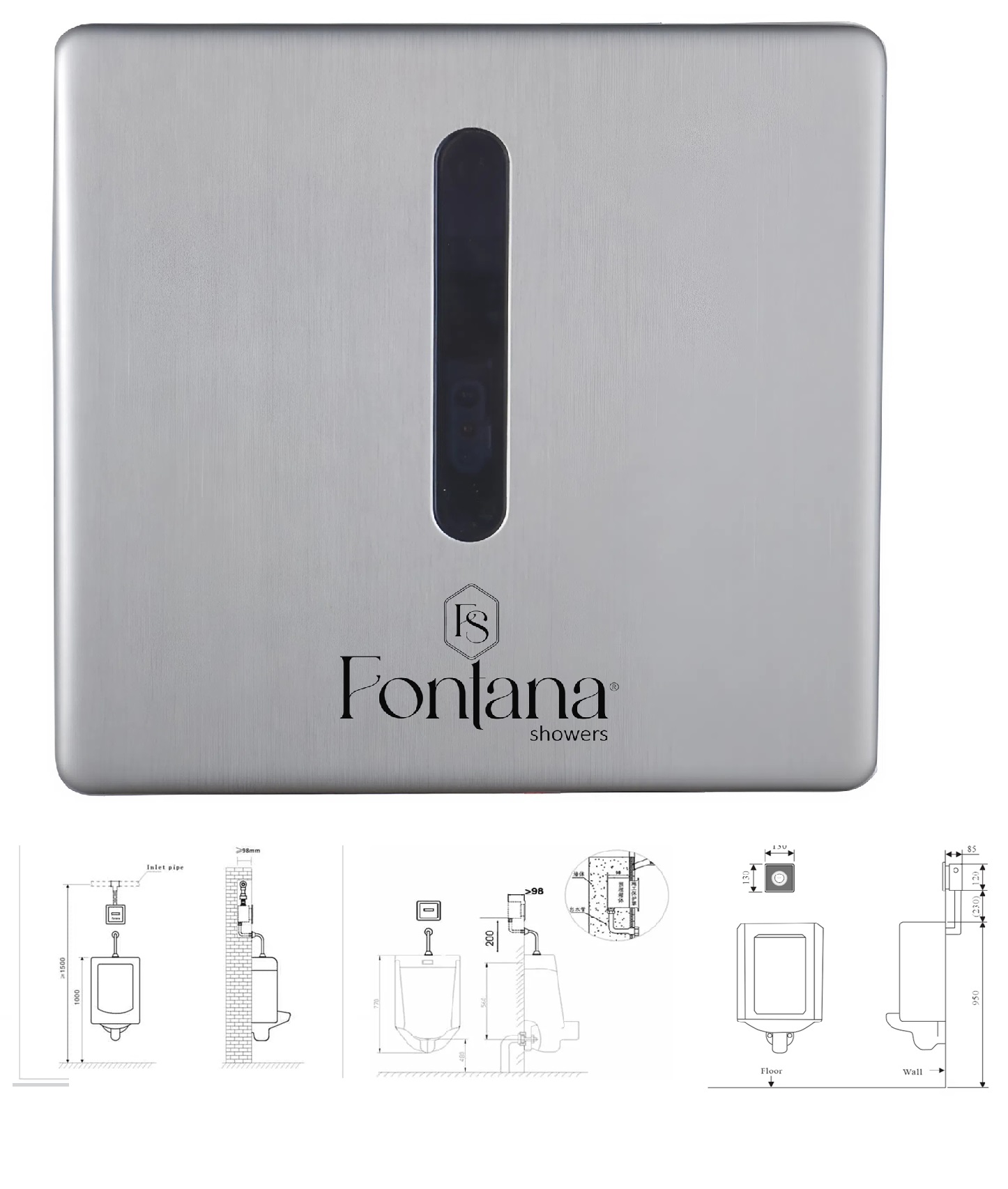
- Anti-vandal faceplates and tamper fasteners
- Sensor lens protection for frequent cleaning cycles
- Service-friendly design to reduce downtime
Hospitality & Hotels
Hospitality programs often prioritize refined wall integration and quiet operation while maintaining commercial reliability. Recessed solutions deliver a clean architectural line while controlling exposed hardware.
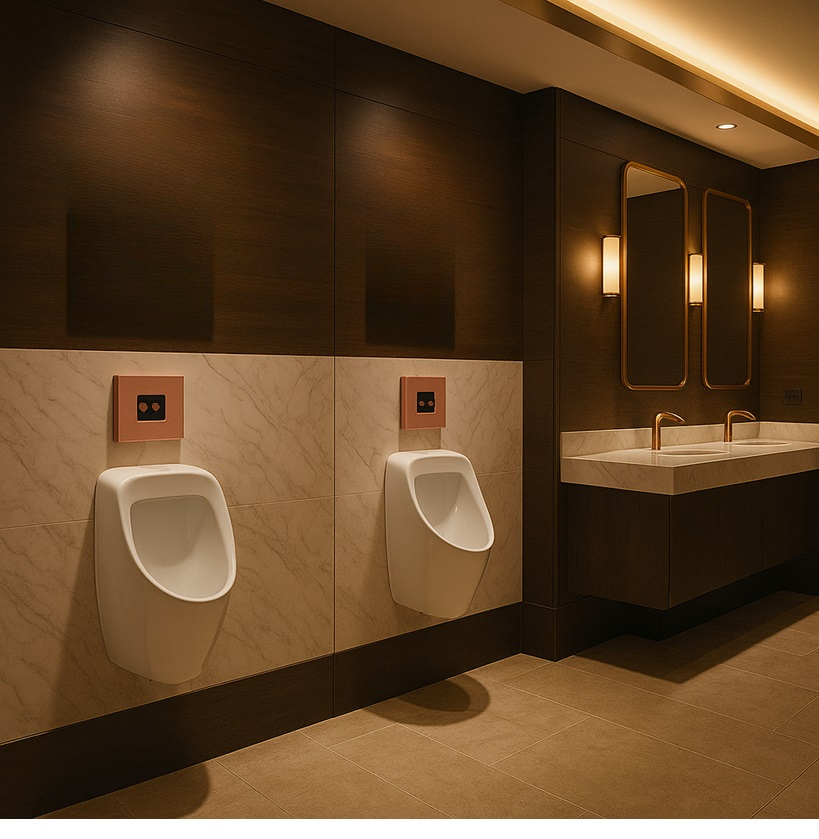
- Recessed installation for clean architectural integration
- Quiet operation for guest-facing spaces
- Consistent performance with premium finishes
- Easy maintenance access without compromising aesthetics
Explore hospitality-grade flush systems →
For guest-facing spaces, consistent operation and clean presentation matter just as much as performance. Systems selected for hospitality should balance aesthetics, durability, and easy upkeep.
Typical Lifecycle Expectations
Understanding component lifespans helps facility managers plan maintenance budgets and replacement schedules. The following estimates are based on commercial-grade systems in typical high-traffic environments:
- Sensor module: 5–10 years (depending on environment and cleaning frequency)
- Solenoid valve: 5–8 years (cycle count dependent)
- Valve body (brass/stainless): 15+ years (with proper water quality)
- Battery replacement (DC systems): 2–5 years (usage-dependent)
- Seals and gaskets: 3–5 years (preventative maintenance recommended)
Regular preventative maintenance — including sensor cleaning, battery checks, and seal inspection — can significantly extend system life and reduce unexpected downtime.
Common Specification Mistakes to Avoid
Even experienced specifiers can overlook key factors when selecting auto flush systems. Avoid these common pitfalls:
- Selecting residential-grade systems — They lack the cycle endurance for commercial traffic
- Ignoring maintenance access — Service panels and access points must be planned in advance
- Overlooking water pressure requirements — Some systems require minimum pressure for reliable operation
- Choosing battery systems without maintenance planning — Budget for regular battery replacement
- Neglecting environmental conditions — Cleaning chemicals and humidity affect sensor performance
- Specifying without field testing — Always validate sensor detection in the actual environment
Why These Systems Continue to Gain Demand in 2026
Touchless flushing remains a strong choice for commercial properties because it supports a cleaner user experience while helping teams manage water use and maintenance efficiency. In high-use facilities, reliable sensor flushing can also improve restroom consistency throughout the day.
As commercial projects continue to prioritize durability and hygiene, auto flush systems are increasingly chosen as part of long-term restroom modernization rather than as simple retrofit accessories.
FontanaShowers Important Links
Urinal Flush Valves Auto Sensor
Urinal Auto Flush Valves (Top Models)
Fontana Advanced Auto Flush Solutions
Fontana Auto-Flush Series
Automatic Flush Valves for Commercial Restrooms
FAQ: Urinals & Auto Toilet Flush
Frequently Asked Questions About Commercial Auto Flush Systems
What is the lifespan of a commercial auto flush system?
Commercial-grade systems typically last 10–15 years with proper maintenance. The sensor module and solenoid may need replacement after 5–8 years, while the brass valve body can last 15+ years.
Are battery-powered auto flush valves reliable?
Yes, modern battery-powered systems are highly reliable with battery life of 2–5 years depending on usage. They are ideal for retrofits where hardwiring is cost-prohibitive. Regular battery checks are recommended.
What is the difference between recessed and exposed flush systems?
Recessed systems are mounted inside the wall for a cleaner appearance and better vandal resistance. Exposed systems mount on the wall surface for easier service access and lower installation cost.
Do auto flush systems reduce water waste?
Yes. Sensor-operated systems eliminate manual over-flushing and ensure consistent flush volume. Studies show water savings of 15–30% compared to manual flush valves in commercial settings.
Which environments benefit most from sensor-operated flushing?
High-traffic environments like airports, transit hubs, schools, office buildings, hospitals, and hospitality venues benefit most from consistent hygiene, water efficiency, and reduced maintenance callbacks.
How often should commercial auto flush valves be serviced?
Quarterly inspections are recommended for high-traffic facilities. Service includes sensor cleaning, battery checks (for DC systems), seal inspection, and verifying flush volume calibration.
Editorial Note
This guide is intended for architects, facility managers, commercial plumbing contractors, and project specifiers evaluating automatic urinal flush systems for high-traffic restroom environments.
All product information, performance data, and recommendations are based on manufacturer specifications, industry standards, and field experience from commercial installations. For specific project requirements, consult with a qualified plumbing engineer or manufacturer representative.
Last updated: June 2026
Commercial Auto-Flush Systems — Technical Link Library
Built for AEC specs, facility maintenance, and high-traffic restrooms
| Resource Group | Key Pages & Articles |
|---|---|
|
Product Categories Browse systems, valves, and sensor flush platforms |
Category 3434 Category 3435 Auto-Flush Systems |
|
Lifecycle Cost / TCO Model maintenance intervals, water use, and total cost of ownership |
10-Year Lifecycle Cost Analysis Battery vs Hardwired Comparison |
|
Specifier & Performance Submittals, performance references, and system families |
Specifier Submittal Package Recessed Flushometer Performance Commercial Flush Systems FlushNet / ProConnect / CoreReact / FlowSyn |
|
Compliance & Water Efficiency ADA/ASSE alignment, conservation, and design comparisons |
ADA & ASSE Compliance Guide Reduce Water Waste Recessed vs Exposed Flushometers |
|
Field Guides Install, secure, troubleshoot, and maintain for uptime |
Installing Recessed Systems Best Anti-Vandal Systems Troubleshooting Guide Low-Maintenance Downtime Reduction |
|
Smart Sensor Technology Sensor logic, activation behavior, and automation intelligence |
Smart Sensor Flush Technology IR vs Time-of-Flight Sensors Hygiene Benefits of Automated Flush False Trigger Prevention |
Conclusion
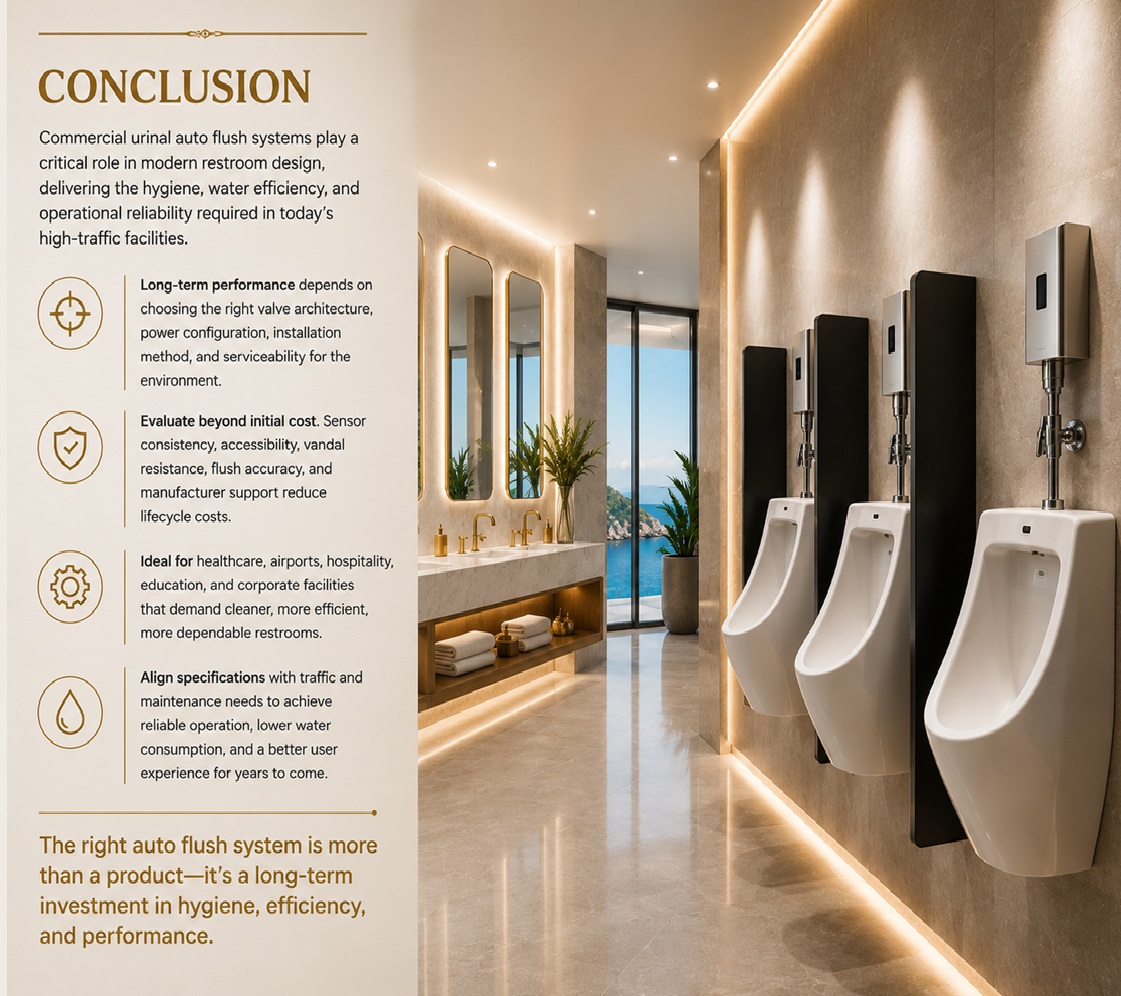
Commercial urinal auto flush systems play a critical role in modern restroom design, delivering the hygiene, water efficiency, and operational reliability required in today’s high-traffic facilities. While sensor technology and automatic flushing may appear straightforward, long-term performance depends heavily on selecting the correct valve architecture, power configuration, installation method, and serviceability features for the specific environment.
For architects, engineers, facility managers, and commercial buyers, the best results come from evaluating systems beyond initial cost. Sensor consistency, maintenance accessibility, vandal resistance, flush accuracy, and manufacturer support all contribute to lower lifecycle costs and improved restroom performance over time.
Whether specifying systems for healthcare facilities, airports, hospitality venues, educational institutions, or corporate buildings, choosing a commercial-grade auto flush solution helps create cleaner, more efficient, and more dependable restroom environments. By aligning product specifications with traffic demands and maintenance requirements, organizations can achieve reliable operation, reduced water consumption, and a better user experience for years to come.
🏗️ Commercial Grade
💧 Water Efficiency
🧼 Hygiene First
🛡️ Vandal Resistant
🏨 Hospitality Spec
🏥 Healthcare Ready
Explore Auto Flush Systems
View Specifier Submittal
FontanaShowers Commercial Restroom Resources
Commercial Flush System Specification Resources
Auto-flush urinals improve hygiene and water control, but poor specifications can create sensor failures, waste, vandal damage, and maintenance delays. These resources support commercial restroom planning, BIM workflows, and touchless fixture selection.
Commercial Bathroom Fixtures Catalog
A broad specification hub for restrooms needing coordinated faucets, valves, dispensers, toilets, and commercial fixture planning.
Open catalog →
Public Restrooms
BIM Files Public Restrooms
Supports designers planning high-traffic restroom layouts where fixture placement, service access, and documentation must stay accurate.
View BIM files →
Toilet Specs
BIM Files Public Toilets
Useful for public restroom projects comparing toilet and flushing fixture layouts before final specification decisions.
View toilet BIM →
Revit Planning
Commercial Toilet Revit Family
Helps AEC teams move from product research into Revit-based restroom documentation for commercial toilet fixture planning.
Open Revit resource →
Commercial Faucets
Commercial Faucets
Connects flush-system planning with commercial faucet selection for restrooms that need durable, easy-maintenance touchpoint control.
View commercial faucets →
Sensor Fixtures
Commercial Wall Mounted Sensor Faucets
Pairs well with auto-flush systems in high-traffic restrooms where touchless operation and cleaner surfaces matter.
View sensor faucets →
Public Applications
Motion Sensor Faucets in Public Restrooms
Explains touchless fixture applications in public restrooms, helping connect sensor flushing with broader hygiene planning.
Read application guide →
Restroom Design
Commercial Restroom Design
Helps frame auto-flush systems within restroom layout, material choice, user flow, durability, and maintenance planning.
View design guide →