
ADA & ASSE Compliance Guide for Commercial Urinal Flush Systems
In commercial restroom specification, compliance is not “extra” — it is the baseline. ADA accessibility requirements and industry performance standards (commonly referenced by specifiers and inspectors) influence flush valve selection, sensor placement, service access strategy, and long-term reliability. This guide explains how to evaluate commercial urinal flush systems with an AEC-grade compliance mindset.
Commercial Flush Systems (Pillar Hub)
• Explore the sensor series families:
Touchless Flush Series (FlushNet / ProConnect / CoreReact / FlowSyn)
Flush activation method
Mounting / access panel planning
Vandal resistance (public use)
Water efficiency tuning
Serviceability & lifecycle cost
What ADA Compliance Means for Urinal Flush Systems
ADA compliance affects more than the urinal fixture height. The flush system’s operability, sensor behavior, and the way a user interacts with the system must support accessible use. In practice, many specifiers prefer sensor-operated systems because they reduce physical interaction requirements and improve hygiene.
- Operability: Systems should not require tight grasping, pinching, or twisting to activate.
- Reach planning: If any manual override or service control is user-facing, ensure it is not placed outside accessible reach.
- Clearances: Flush valve placement should not interfere with required circulation and approach clearances.
- Consistency: Sensor detection should be stable and predictable to prevent nuisance activations.
ASSE / Performance Expectations (Specifier-Oriented)
Many commercial specifications reference performance and durability expectations associated with flush valves and plumbing system components. While the exact standard referenced can vary by jurisdiction and project spec, the practical evaluation remains consistent: the flush system must perform reliably under real-world pressure conditions, repeated daily cycling, and harsh maintenance environments.
- Repeatable flush performance under variable supply pressure
- High-cycle endurance in high-traffic restrooms
- Serviceable internal assemblies (diaphragm/solenoid access strategy)
- Sensor stability under lighting variation and cleaning chemicals
Recessed Wall Urinal Flush Valves vs Exposed Flushometers
Environment-Based Compliance Notes
✈ Airport & International Terminals
Airports combine continuous traffic with strict operational uptime requirements. Compliance planning should include concealed component protection and a service path that does not require shutting down an entire restroom bank.
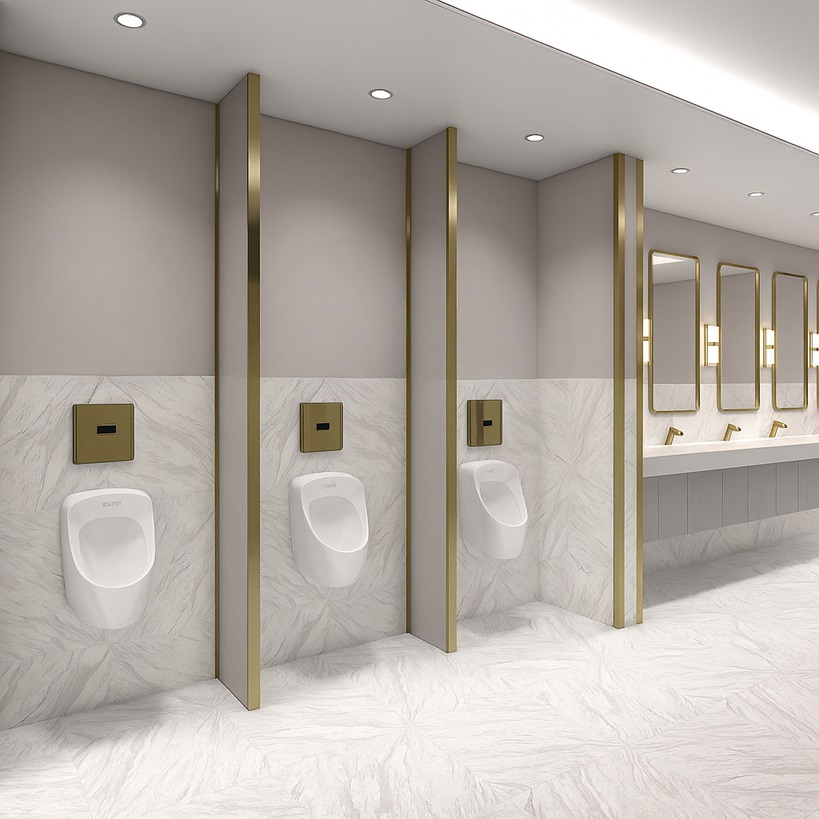
- Prefer vandal-resistant sensor lenses and concealed valve architecture
- Plan access panels to support rapid servicing without wall damage
- Validate consistent detection behavior across varied ambient lighting
🏢 Office Buildings
Office programs prioritize comfort, quiet operation, and predictable service intervals. Compliance considerations focus on clean reach/clearance planning and stable sensor calibration to reduce nuisance activations.
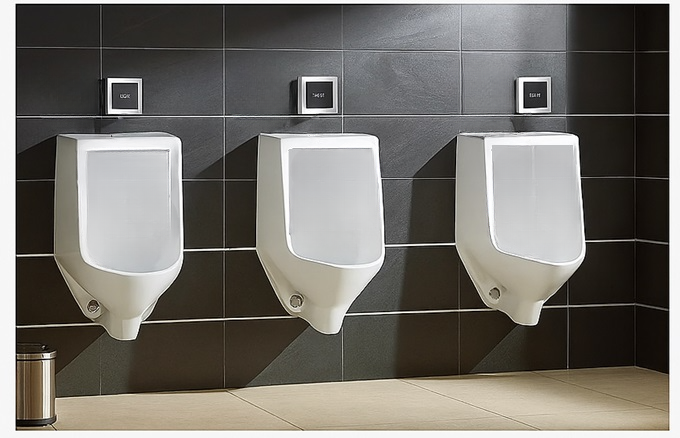
- Ensure any user-facing controls remain within accessible reach ranges
- Prioritize quiet, stable actuation behavior
- Document maintenance access method for facility standards
🚻 Public Restrooms (Transit / Schools / Parks)
Public restrooms have the highest risk profile for vandalism and misuse. Compliance planning should include reduced exposed hardware and stable sensor performance even when surfaces are heavily cleaned.
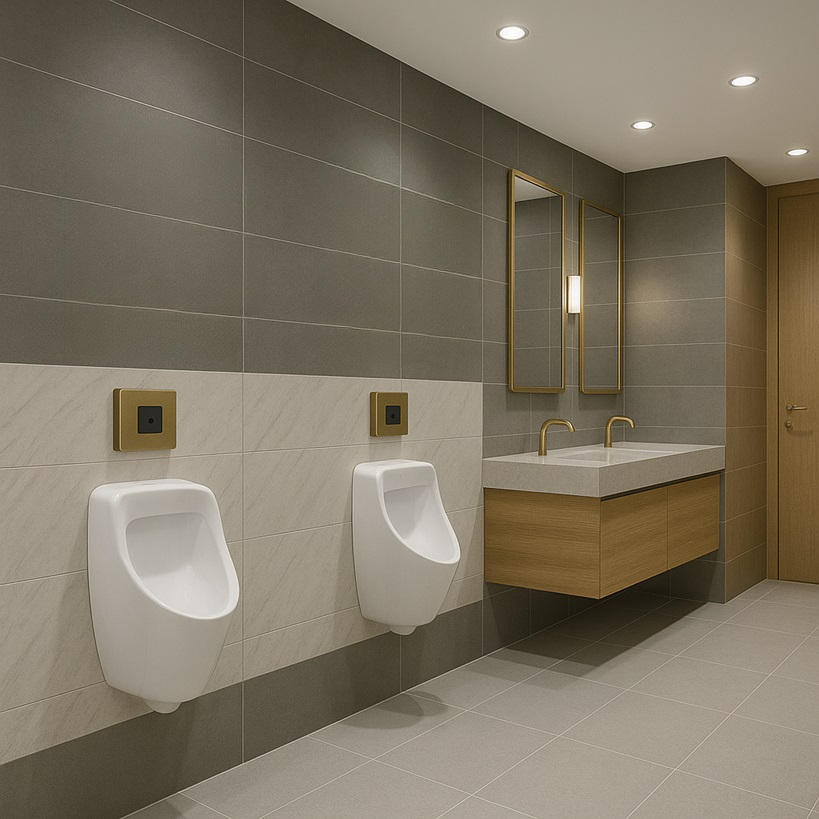
- Concealed/recessed configurations reduce exposed components
- Use tamper-resistant fasteners and protected sensor windows
- Prefer consistent sensor logic to reduce nuisance flush events
🏨 Hospitality & Hotels
Hospitality restrooms often require concealed systems for design continuity. Compliance should be paired with service access planning so maintenance does not compromise finished wall surfaces.
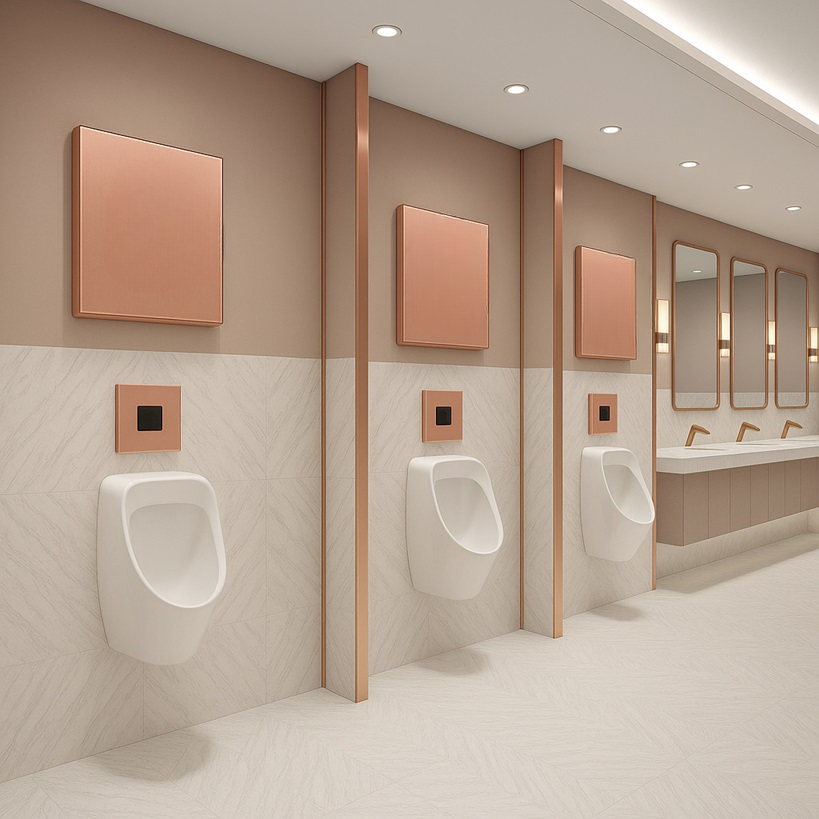
- Recessed systems support minimal visual clutter and accessible operation
- Plan access panels behind architectural finishes
- Align flush volume calibration with water efficiency goals
Spec Documentation (to Include)
- Submittal and cut sheet package
- Flush volume range and tuning method
- Power configuration (hardwired/battery/hybrid) and service procedure
- Sensor detection range guidance and mounting recommendations
- Warranty and maintenance interval expectations
Explore FontanaShowers
- Urinal Flush Valves Auto Sensor
- Urinal Auto Flush Valves
- Fontana Auto Flush Series
- Automatic Flush Valves
- FAQ: Urinals & Auto Toilet Flush
Optimize high-traffic restroom performance with integrated, sensor-calibrated flushing solutions beginning with
touchless flush control systems
Compare Fontana with Other Major Brands in ADA & ASSE Compliance Guide for Commercial Urinal Flush Systems