
How Sensor-Operated Urinal Flush Systems Reduce Water Waste in Commercial Buildings
Water conservation in commercial restrooms is no longer a compliance checkbox — it is an operational mandate. Sensor-operated urinal flush systems reduce unnecessary flush cycles, stabilize water volume output, and improve long-term utility efficiency across high-traffic facilities.
The Engineering Behind Water Reduction
- Precise user-detection timing logic
- Adjustable flush duration calibration
- Pre-flush delay programming
- Pressure-compensating diaphragm systems
- Automatic purge cycles to prevent stagnation
Unlike manual flushometers that depend on user behavior, sensor systems ensure water is released only when occupancy is confirmed.
Environment-Based Water Efficiency Impact
✈ Airport & International Terminals
Airports experience continuous restroom turnover. Even minor over-flush volumes multiply into significant annual water waste. Sensor-operated valves maintain calibrated flush volumes, reducing unnecessary activations.
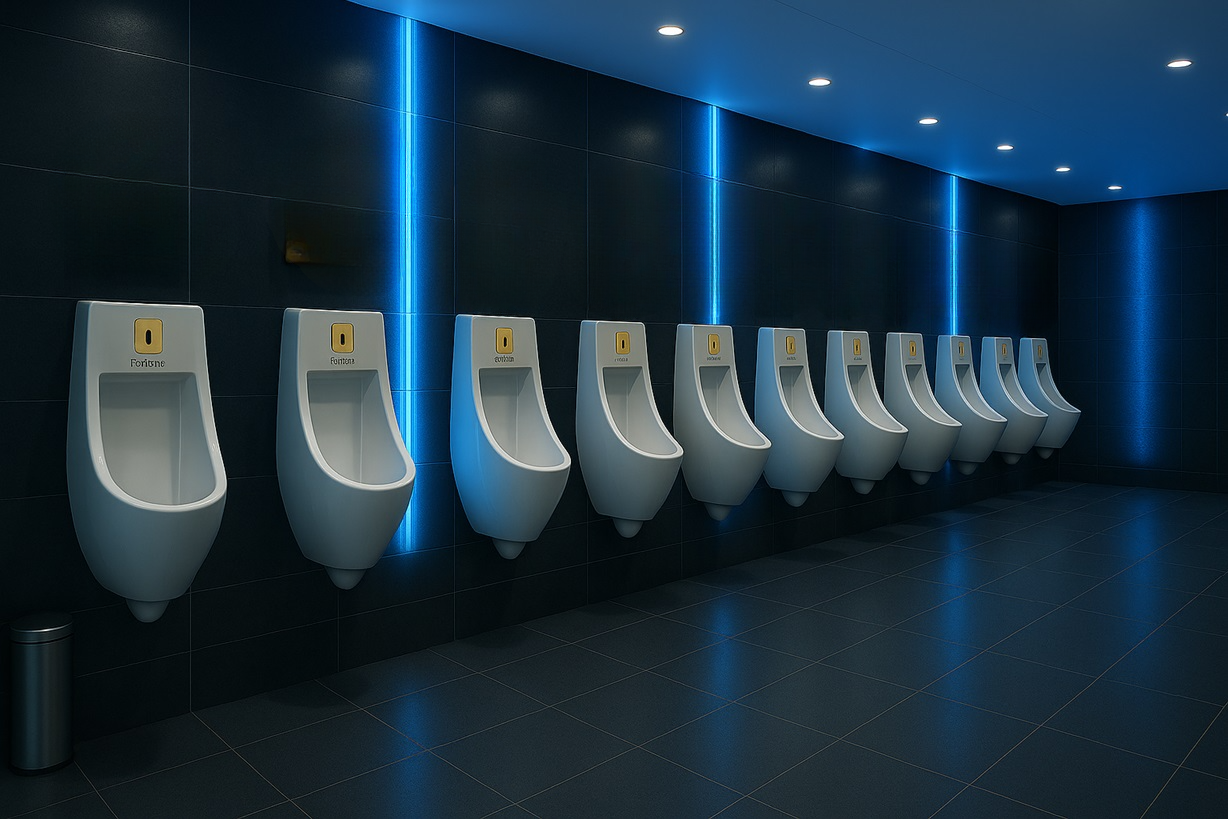
- Reduced false flush cycles
- Precise GPF configuration
- Long-term utility savings
🏢 Office Buildings
Office facilities benefit from stable sensor detection that prevents “courtesy flushing” or double activation common in manual systems.
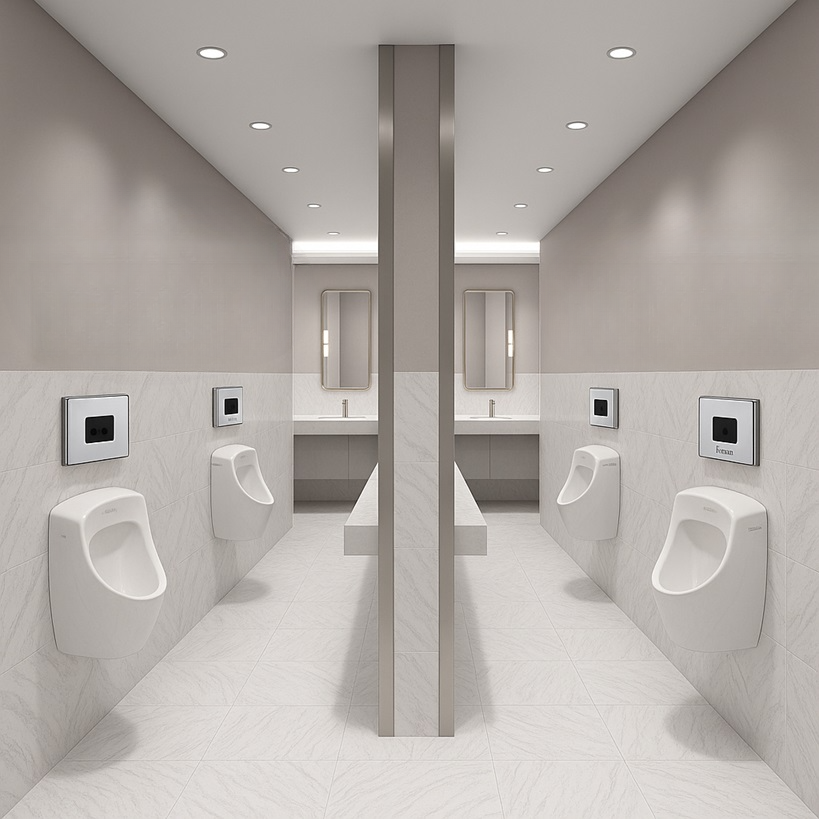
- Consistent flush volume per activation
- Reduced water variability
- Programmable delay timing
🚻 Public Restrooms & Transit Hubs
Public restrooms often suffer from repeated manual flushing. Sensor systems eliminate this inefficiency by activating only after user departure detection.
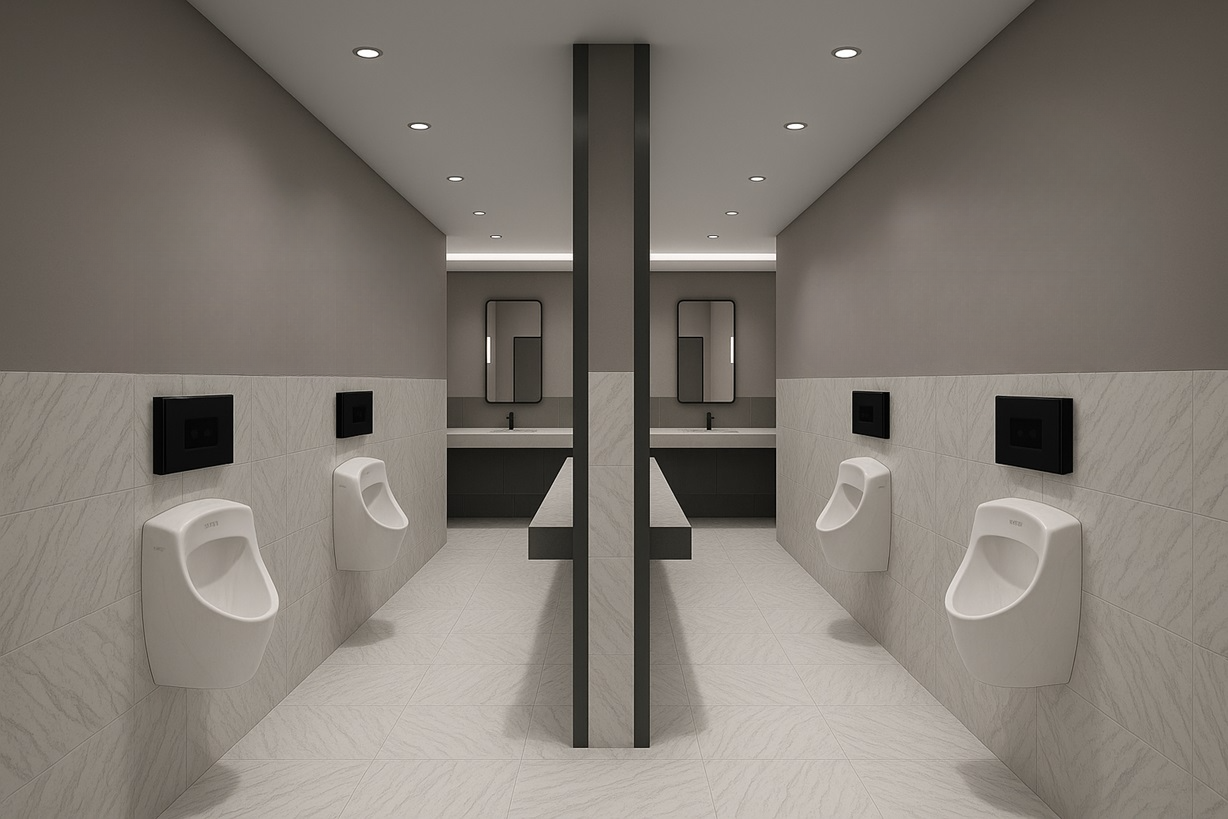
- Prevents unnecessary double flush
- Reduces water overuse from misuse
- Stabilizes daily consumption levels
🏨 Hospitality & Commercial Developments
Hotels and commercial mixed-use properties benefit from water-efficient flush calibration that aligns with sustainability goals and green building certifications.
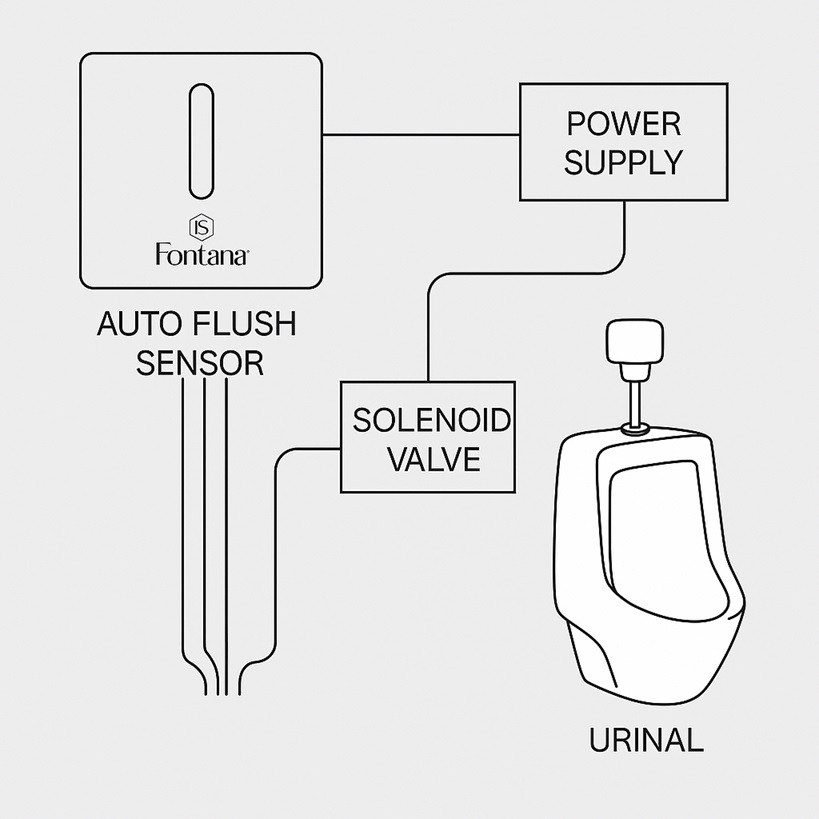
- Optimized flush duration
- Supports sustainability initiatives
- Reduces long-term operating costs
Quantifiable Impact
In large-scale commercial properties, properly calibrated sensor-operated urinal flush systems can reduce annual water consumption by thousands of gallons per fixture when compared to inconsistent manual flushing.
- Lower utility bills
- Improved water management reporting
- Reduced environmental footprint
- Support for sustainability benchmarks
Explore FontanaShowers
- Commercial Urinal Auto Flush Valves
- Fontana Auto Flush Series
- Automatic Flush Valves Collection
- Urinal Auto Flush FAQ
- Advanced Auto Flush Solutions
Water efficiency in commercial restrooms is achieved through engineering precision — not user behavior.
Optimize high-traffic restroom performance with integrated, sensor-calibrated flushing solutions beginning with
touchless flush control systems and commercial-grade urinal assemblies, engineered under the Auto-Flush Systems program and validated by a comprehensive decade-long lifecycle performance study covering sensor accuracy, activation delay thresholds, water volume optimization, and preventative maintenance scheduling. For specifiers, the Submittal Package integrates with documented recessed valve hydraulic performance metrics and the complete Commercial Flush Systems platform, including scalable sensor families in the FlushNet / ProConnect / CoreReact / FlowSyn architecture. Design decisions can be further informed through code-compliance and performance articles such as the ADA & ASSE compliance analysis, water efficiency impact study, and the recessed versus exposed evaluation, with supplemental field insights available here, here, andhere. Facilities managers can strengthen uptime reliability using procedural documentation on system installation, anti-vandal engineering, power-supply lifecycle modeling, performance troubleshooting, sensor intelligence technology, and maintenance optimization protocols.